Light gauge steel vs timber framing: advantages and disadvantages
⏱️ 6 min read
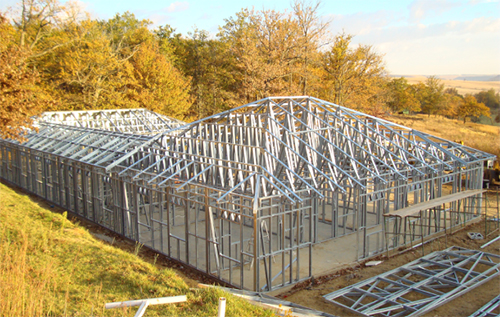
Across the construction industry, a quiet shift is underway.
Builders who have spent decades working with timber are rethinking their approach. Not because timber has suddenly stopped working, but because the demands around speed, cost certainty, and efficiency have changed.
With nearly 50 years of experience and machines operating in more than 80 countries, Howick has seen this transition firsthand. Light gauge steel (LGS) framing is no longer an alternative, it is becoming a preferred system for builders looking to work smarter, not harder.
Too busy? Here is what you need to know:
- ● Light gauge steel framing is faster, more accurate, and produces significantly less waste than timber.
- ● It delivers greater cost certainty through offsite manufacturing and systemised processes.
- ● Timber still has advantages in familiarity and lower upfront setup, but comes with variability and inefficiency.
- ● Builders are switching not just for material benefits, but for better control over programme, cost, and output.
Contents
- 1. Light gauge steel vs timber: a quick comparison
- 2. Speed: from weeks to days
- 3. Accuracy: built to the millimetre
- 4. Efficiency: less waste, more output
- 5. Strength and durability: built for modern demands
- 6. Design flexibility: precision meets possibility
- 7. Where timber still holds ground: disadvantages to consider
- 8. Why builders are making the switch
- 9. Considering the next step?
- 10. FAQs
1. Light gauge steel vs timber: a quick comparison
Factor |
Light gauge steel framing |
Timber framing |
|---|---|---|
| Speed | Fast, systemised, often prefabricated | Slower, labour dependent |
| Accuracy | Precision to ±0.5mm | Prone to variation and movement |
| Weight | Lightweight, easy to transport | Heavier, bulkier |
| Waste | Minimal, highly optimised | More waste onsite |
| Durability | No warping, rot, or pests | Susceptible to moisture and pests |
| Fire resistance | Non-combustible | Combustible |
| Cost certainty | High (predictable outputs) | Variable (labour and material risk) |
For many builders, this table alone explains the growing momentum behind LGS. But the real story sits in how these differences play out on real projects.
2. Speed: from weeks to days
One of the most immediate differences is build speed.
With timber, framing is typically cut, adjusted, and assembled onsite. Progress depends heavily on labour availability, coordination, and weather conditions.
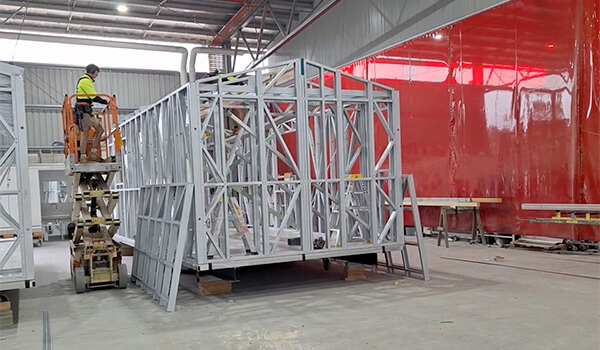
With light gauge steel, framing components are roll-formed offsite using automated systems and delivered ready to assemble, or even pre-assembled as panels or modules.
That shift changes everything.
At Uniplan Group in Australia, one modular building is consistently delivered every 21 days. That level of repeatability is only possible through a systemised approach to design, manufacturing, and assembly.
And at Wolf Partners in the US, Josh Nicholson recalls:
"There was one day I was driving to the office and there was a cigar shop going up, and these guys were unloading a trailer full of metal panels. On my way back from lunch they were done. And I thought, well, if they can build a 2,000 square foot cigar shop in a morning, what is this stuff?" - Josh Nicholson, Wolf Partners
That moment captures what many builders realise when they first encounter LGS: speed is no longer limited by traditional processes.
3. Accuracy: built to the millimetre
Construction has always involved a degree of tolerance.
But tolerance comes at a cost: rework, delays, and compounding errors across trades.
Light gauge steel changes that equation. When components are manufactured using Howick roll-forming technology they are accurate to within ±0.5mm. Holes, fixings, and connections are all pre-engineered and positioned with precision.
The result is a system where parts fit together as intended, reducing the need for onsite adjustment.
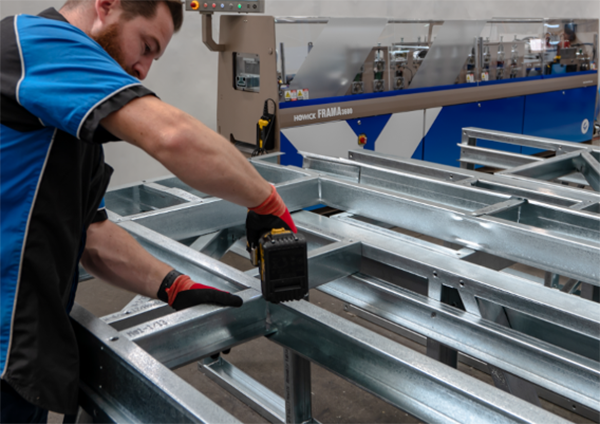
As Hamish Coubray, Director of Howick Ltd and Rollforming Services, explains:
"When everything is formed to exact specifications, the build process becomes far more predictable. You're not correcting mistakes onsite - you're assembling what's already been resolved in design." - Hamish Coubray, Director, Howick Ltd
For builders, that translates to fewer delays, less rework, and tighter control over outcomes.
4. Efficiency: less waste, more output
Material efficiency is another key differentiator.
Timber framing typically generates significant onsite waste, with offcuts, damaged materials, and over-ordering to manage uncertainty.
In contrast, LGS framing is produced directly from coil, optimised through software, and manufactured to exact requirements. Waste is dramatically reduced, and what remains is recyclable.
At Lark Builders in the US, the difference was stark. When constructing their sheds with timber, they were seeing around 20% of material lost to offcuts and faults: waste that then had to be transported and disposed of. After switching to steel, that waste all but disappeared.
As they put it:
"You can take a steel building - say one that is 12 ft by 24 ft - and in your hand hold the steel you wasted running out that product. And we actually get paid some for the scrap steel." - Lark Builders
For builders operating in high-demand environments or constrained labour markets, this efficiency becomes a competitive advantage.
Considering the switch to steel?
If you are starting to explore how light gauge steel could fit into your projects, the next step is understanding what it looks like in practice.
Download our FREE roll-forming Machine Buyer Guide to get a clearer picture of what is involved.

5. Strength and durability: built for modern demands
Timber has served the construction industry well for generations. But it comes with inherent limitations.
It can warp, shrink, rot, and attract pests. It is also combustible, which introduces additional design and compliance considerations.
Light gauge steel, by contrast:
- Does not warp or twist
- Is resistant to pests and moisture
- Is non-combustible
- Maintains structural integrity over time
These advantages are most evident in harsh environments.
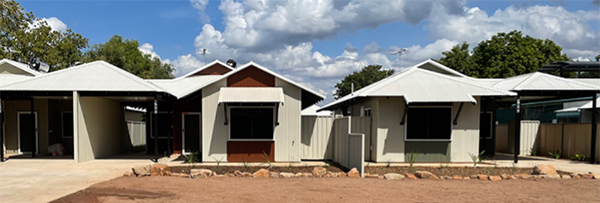
In Kununurra, northern Western Australia, buildings face 40+ degree heat, high humidity, torrential rain, strong winds, and constant termite pressure. In projects like the Mistletoe Avenue social housing development, steel framing provides the stability and durability needed to perform reliably under these conditions.
6. Design flexibility: precision meets possibility
There is a common perception that steel limits design flexibility.
In reality, the opposite is often true.
When light gauge steel framing is driven by digital design and automated manufacturing, it enables a high level of precision, even in complex geometries that would be difficult to achieve consistently with traditional materials.
This is where things start to get interesting.
Advanced design practices, such as those used by STUD-IO, combine computational design with Howick roll-forming technology to push beyond standard framing. Their work demonstrates how complex architectural intent can be translated directly into manufacturable components, removing the disconnect between design and build.
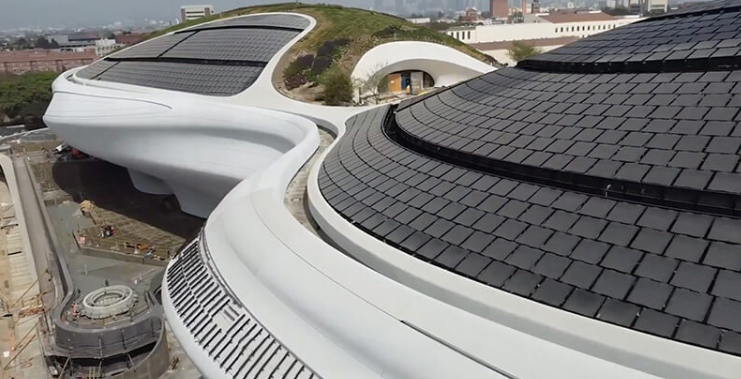
A standout example is their contribution to projects like the Lucas Museum, where intricate, curved forms and highly detailed structural elements require absolute accuracy and repeatability. With digitally driven workflows and roll-formed steel components, designs that might once have been considered impractical become not only possible, but efficient to produce.
For builders and designers, this changes the conversation. It is no longer about working within the limits of the material, it is about using precision and automation to expand what is achievable.
7. Where timber still holds ground: disadvantages to consider
To be clear, light gauge steel is not a universal replacement for timber in every scenario.
There are real considerations to weigh:
- Upfront investment: moving to LGS often involves adopting new equipment and processes.
- Learning curve: teams need to adapt to new systems and workflows.
- Design integration: requires alignment between design software and manufacturing.
However, for many builders, these are short-term hurdles.
Once systems are in place, the gains in speed, accuracy, and efficiency tend to outweigh the initial transition costs, particularly for businesses looking to scale or improve consistency.
8. Why builders are making the switch
The decision to move from timber to light gauge steel is rarely about a single factor.
It is usually the result of accumulated pressure:
- Labour shortages
- Programme delays
- Cost overruns
- Increasing demand for speed and certainty
LGS addresses these challenges at a system level, not just as a material, but as a way of working.
And as more builders adopt it, the momentum continues to build.
9. Considering the next step?
If you are exploring whether light gauge steel framing is right for your business, the key question is not just what material to use but how you want your projects to run.
Faster builds. Greater certainty. Less rework. More control.
Those are the outcomes driving this shift. And they are worth understanding properly.
10. FAQs
Is light gauge steel framing more expensive than timber?
Upfront costs can be higher depending on setup, but overall project costs are often lower due to reduced labour, faster build times, and less waste.
How hard is it to switch from timber to LGS framing?
There is a learning curve, particularly around design and workflow. However, many builders transition successfully with the right systems and support in place.
Is steel framing suitable for residential homes?
Yes. LGS is widely used in residential construction, from single homes to multi-storey developments.
What are the disadvantages of light gauge steel framing?
Initial investment, process change, and training requirements are the main considerations. These are typically offset by long-term efficiency gains.
How does LGS perform in extreme conditions?
Very well. It offers strong performance in high wind, seismic, and fire-prone environments.
Can traditional builders work with LGS?
Yes. With the right systems and guidance, teams familiar with timber can adapt to steel framing effectively.


