SMART BUILD SPOTLIGHT: SYNC Industries
⏱️ 6 min read
Welcome to the latest SMART BUILD SPOTLIGHT, where we dig deep to find out how smart construction businesses are using innovation to gain a competitive advantage and push the boundaries of industrialised construction.
This time we are looking at how SYNC Industries is transforming the way bathrooms are built with their offsite pod concept. They use light gauge steel framing automation to manufacture a bathroom offsite that is 100% finished - ready for delivery and connection.
No time? This frames it up in a minute:
- SYNC Industries uses offsite, light gauge steel framing automation to deliver almost 4,000 bathroom pods a year throughout Victoria, Australia.
- Their innovative method means they deliver a more accurate, repeatable end product, with less waste and fewer delays.
- One of the main benefits is that SYNC is the sole supplier - bathroom pods arrive onsite finished and ready to be craned into place.
- Howick's light gauge steel framing automation is the perfect tool for SYNC with light weight construction, easy maintenance, and industry leading reliability.
Contents
- Quality bathrooms built with consistency at scale
- The origins of SYNC: Offsite goes mainstream
- Faster, easier, more accurate: How SYNC is able to deliver industry-leading precision
- The problem with exceeding client expectations
- The unique challenges of a streamlined build process
- Why light gauge steel was a no-brainer for SYNC
- A culture built on genuinely caring about people
- FAQ
All our SMART BUILD SPOTLIGHT episodes are now available on our YouTube channel. If you haven’t already, subscribe today and immerse yourself in thought provoking content.
SYNC has perfected the art of building bathrooms. Unlike traditional methods, there is no building framing onsite, and no lining up multiple tradespeople to fight it out for space and scheduling insitu.
Instead, there is one supplier. A finished bathroom module that arrives onsite ready to be connected. Less waste, fewer labour hours, fewer delays, fewer deliveries to site, and a considerably streamlined process. What's more, these bathrooms are repeatable, meaning they offer considerably better value and end results at scale for large projects such as apartment buildings or hotels.
Quality bathrooms built with consistency at scale
SYNC has provided bathroom pods to countless major projects in several sectors, including multi-unit residential, aged care, health, hotels, student accommodation and government. For example, they built 123 bathrooms for the Ovolo luxury hotel in the leafy inner city Melbourne suburb of South Yarra. That included eight pod types, all with different layouts and unique designs.
We spoke to two of the people behind SYNC, Sami Raad, General Manager, and Antonio Di Vito, Operations Director, to find out more about the process, how their solution improves on traditional methods, and why they use Howick machines.
The origins of SYNC: Offsite goes mainstream
The business was established in 2011 under the name Unitised Building. Back then, the focus was on fitting out shipping containers. It was then rebranded as SYNC Industries in 2013.
At the time there was a big hole in the market for modular construction in Australia. It was a niche market back then, but no more - offsite has gone mainstream and SYNC has too.
Fast forward to 2017, a few years after SYNC started, Sami walked in the door, bringing a background in mechanical engineering. At that time Melbourne was losing a lot of local industry with the closure of a few key manufacturing facilities, so Sami explains his job prospects were looking like construction, or construction. And that is where he ended up, but not in 'construction' as he imagined it. It was at a job fair that he stumbled upon SYNC:
"... This is interesting, it sort of looks like manufacturing. That's not something you see everyday ... I went to Brooklyn, to our factory there, and had an interview and I automatically fell in love. This is something I really want to be a part of." - Sami Raad
Sami joined as a project coordinator, and clearly performed well because he was eventually offered (and accepted) a role as part of the executive team.
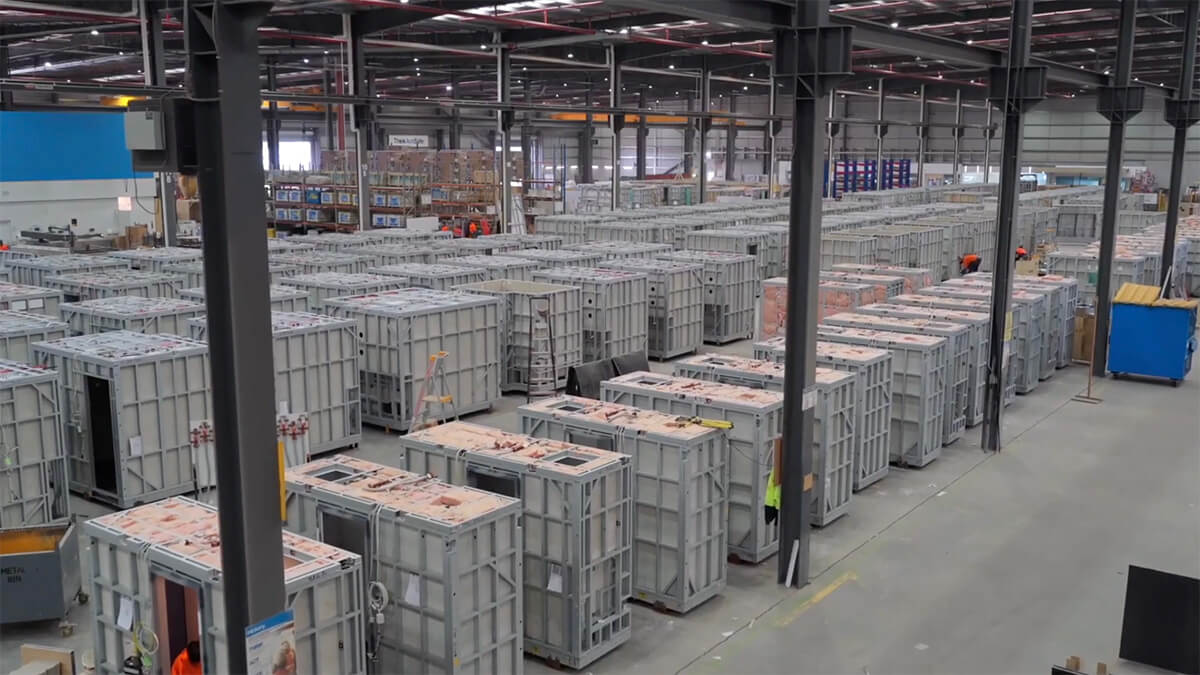
Antonio Di Vito, Operations Director at SYNC, orchestrates the facility's operations, churning out nearly 4,000 bathroom pods annually. He thrives on keeping busy and constantly learning, and he saw that at SYNC he had a chance to do both:
"I can join the two together and make something great for myself ... [it's been great] being able to come here every day and feel I am where I want to be." - Antonio Di Vito
Faster, easier, more accurate: How SYNC is able to deliver industry-leading precision
Sami and Antonio agree that vertical integration has been key to SYNC's success. The problem with building a bathroom the old way is that there are several subcontractors involved and that frequently causes varying end results, coordination difficulties, and timeline delays:
"We've taken on all those processes where traditionally you'd have a different subcontractor. We've ... taken that all in-house - it's all set out by our 3D CAD design which models every part of the bathroom." - Sami Raad
There is no need for a skilled tradesman to interpret drawings because it is all exactly specified. The bathroom's framing is automatically roll-formed via smart software and a Howick machine, then it can be assembled by simply following instructions. The bathroom is then finished inside their factory with their own skilled tradespeople (electricians, plumbers, tilers etc).
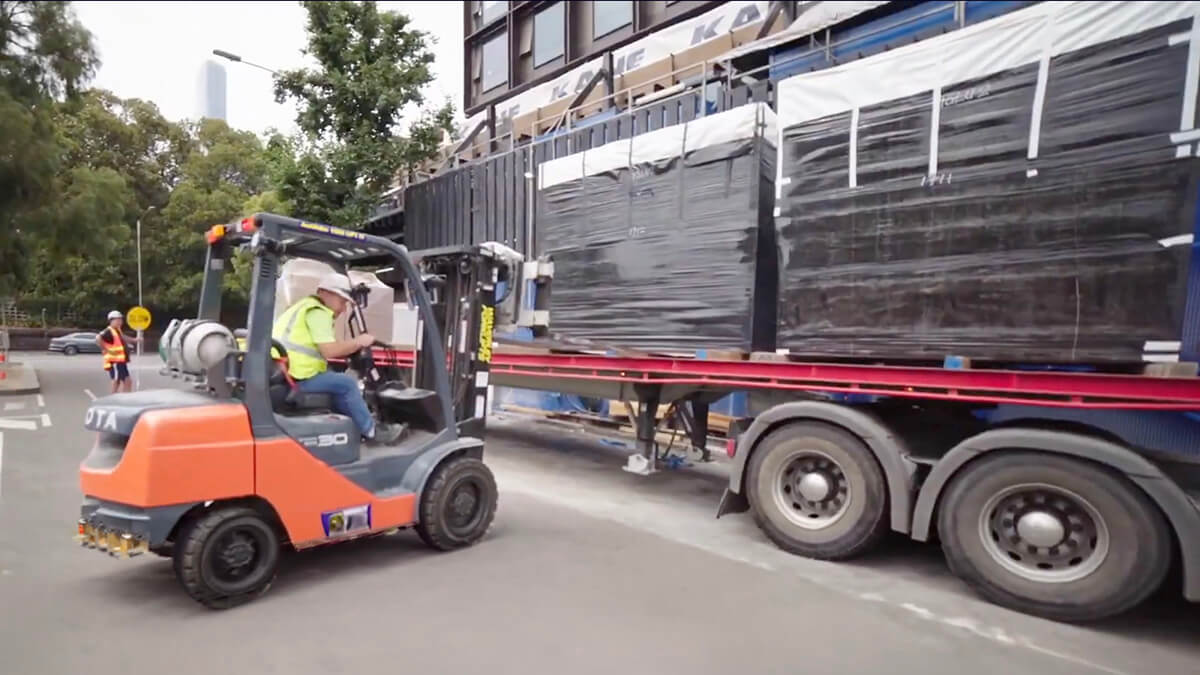
Then it is wrapped up and delivered onsite to be moved into place and connected. Simple as that.
Antonio adds that their manufacturing process is not just faster and easier to coordinate, it is also more accurate. Normally on a construction site if something is 10mm off, it is met with a shrug, but at SYNC, because of the way they build, they are able to deliver exactly what the client orders with extreme precision.
The problem with exceeding client expectations
SYNC's precise, smart approach extends beyond the accuracy of their framing and fitout. That detail-obsessed strategy carries through from design to delivery and beyond, Sami says:
"What smart means to us is coordination ... That's really the service that we give. Of course we give them [customers] a bathroom pod, but to make that work onsite, you can't just deliver it and hope for the best. So the smarts and the intelligence come from us raising things early." - Sami Raad
In other words, a good shop drawing is delivered to clients well before they are even thinking of it, establishing design processes and communicating right from the start. Mass customisation means different bathroom layouts can be designed then manufactured at scale. Timelines can be agreed upon far in advance, and SYNC has a very high level of confidence that they will meet them.
This means costs are often lower, and many other intangible benefits are delivered, thanks to easier coordination, expert knowledge and a better end product. For Antonio, the complex systems SYNC has in place are all about making the process simpler, not more complicated.
The unique challenges of a streamlined build process
SYNC's processes are non-traditional, so their timelines are more reliable than industry standards. As Sami highlights, they have run into some unique challenges with clients as a result:
"There's that mentality of, 'ahh I'm going to tell you I need it in May when I really need it at the end of June, just because I want to make sure that bathroom is ready for me.' It creates complexity for us [with storage issues]. So trust us. We'll give you the pod when it's required." - Sami Raad
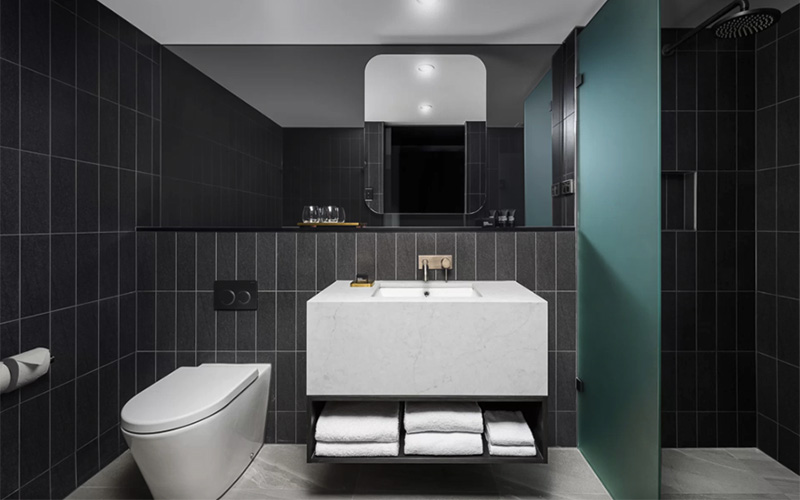
Image courtesy SYNC Industries.
Clients are starting to come around to this reality, and Sami says surveyors are beginning to understand that everything SYNC builds exceeds standards. It has been a journey, but as the industry gets more exposure to solutions like SYNC's, demand will only grow.
Why light gauge steel was a no-brainer for SYNC
SYNC went on a little journey before they connected with Howick as a supplier. First, they decided that light gauge steel was the right material for their bathroom pods:
"... It makes the most sense. I mean, the whole essence of the bathroom pod, you want to reduce the mass, right? Reducing mass reduces the cost. Reduces a lot of things, carbon footprint, that sort of thing." - Sami Raad
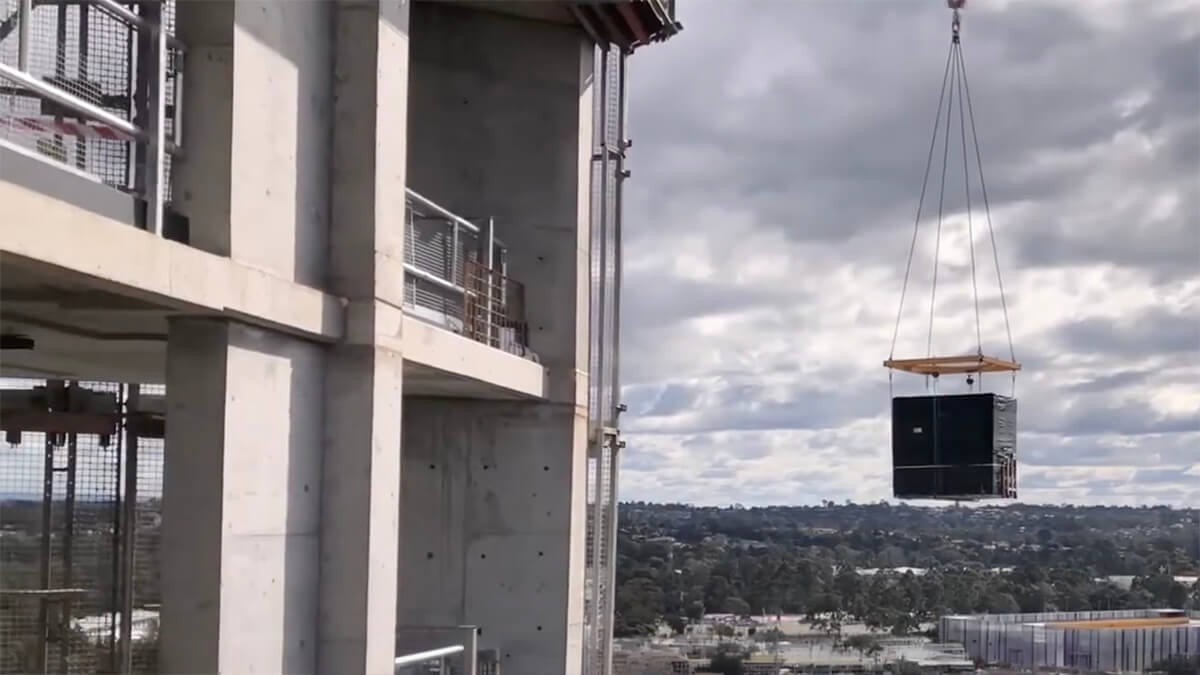
What is more, SYNC's bathroom pods are often lifted 30 or 40 stories high, which makes light weight construction even more beneficial. They also need to be over-engineered to build in as much safety as possible, so SYNC can be sure they will stay together while being lifted. Being light and flexible is also ideal when building offsite, explains Sami:
"... they're being handled, they're being pushed around. They need some level of flexibility as well, you know, when we're putting things together. There are probably tens of thousands of components." - Sami Raad
With all those factors in mind (and many more) light gauge steel just made sense. After they decided on light gauge steel, SYNC started with a different brand of roll-forming machine, but it was limited in what it could create and the variations it could handle. When they bought their first Howick machine, it was quite the opposite:
"The beautiful thing about Howick is that it just works. It just goes to show how versatile the machine is. To be able to handle all of the variations that we throw at it and to pump it out so consistently. I think that's the most impressive thing." - Sami Raad
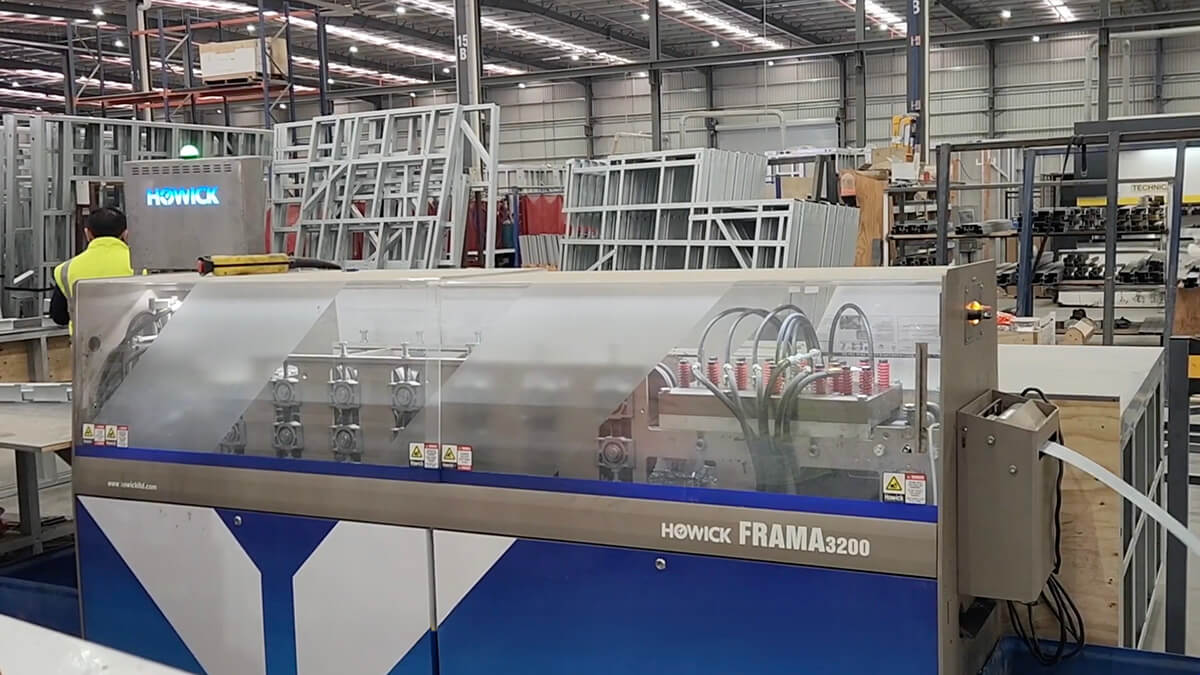
Not only is the machine capable, but Sami reckons there is very little maintenance involved, and the maintenance that is needed is very simple:
"We're able to make it work with just locally sourced materials. And if you think about any other machine that you get from any other supplier, from Germany or Italy. Forget it, you're not going to be able to turn around and fix it yourself." - Sami Raad
Antonio adds that for him it is all about the reliability of Howick - both the machine itself and the people behind it. On the rare occasions when something does break, you can call any time of day and get it fixed:
"It's not a headache for you. Because that's all it is for me, the people, the customer care, and the ... value you guys add to our business, you know?" - Antonio Di Vito
A culture built on genuinely caring about people
Similar to Howick, SYNC has a culture based on respect, where senior staff like Antonio and Sami lead by example, not by command. Sami explains:
"It doesn't matter who you are, what your role is, [if] you're a cleaner, you do walls offline, you're a machine operator, you're all treated equally and fairly. You're part of the team. There's no weird levels or cliques, we make a point to ensure that ... everyone's concerns are heard. Then once you show that you genuinely care about someone, they naturally want to return it back to you." - Sami Raad
Sami adds that this comes naturally to the company's senior team and that they do not do anything special. At the end of the day, their team of 120 shows up to work because they know the people that look after them genuinely care.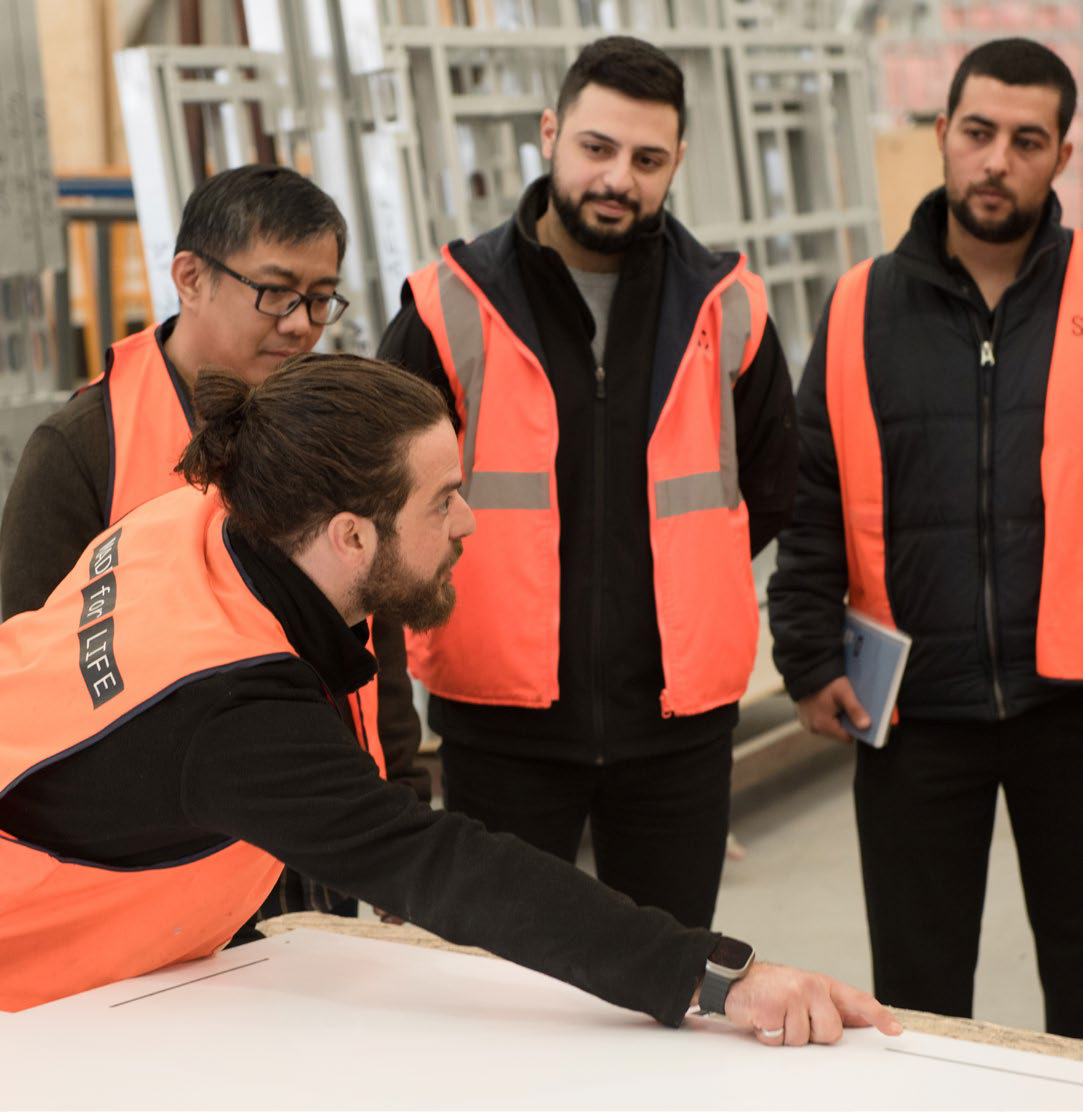
Antonio goes on to explain that culture is one of discipline. Not the boarding school, top-down, telling off type - but something driven by team spirit. After all, if one person misses a target, then a couple of days down the line, someone else comes to work and has nothing to do.
He adds that making sure people feel safe and are happy at work ensures issues are raised early, before they become big problems:
"If you make a place where people feel safe to speak up for anything, emotions, work, whatever it might be, you can fix things, you can address things quicker, you can train people better." - Antonio Di Vito
What's next? Making work easier, faster, and safer with automation. The future for SYNC is looking promising. Demand for their bathroom pods is only going to increase as adoption of offsite construction methods becomes increasingly mainstream.
How will they keep up? Sami's answer is simple:
"Robotics and automation is something we work on and it's something that we want to integrate here more and more. Mainly for making things easier and faster and safer for people. So, it's not about replacing anyone. It's about complementing what we do already." - Sami Raad
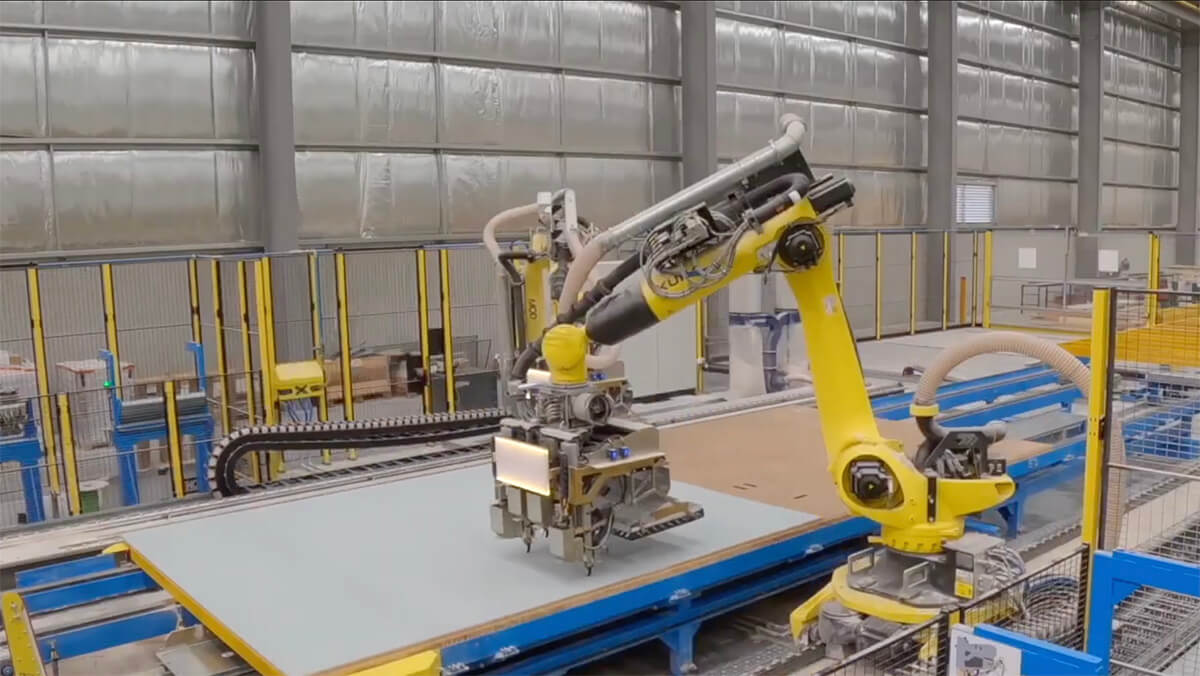
Antonio adds that hiring more people alongside automation, and continuing to provide a positive, safe, and disciplined workplace, is key. If they can do that, they can have a positive impact on people's lives - and at the end of the day, that is what it is all about.
All our SMART BUILD SPOTLIGHT episodes are now available on our YouTube channel.
We travel around the world and meet with industry trailblazers to explore how they are pushing the boundaries with smarter construction methods. Each episode gives you a behind the curtain look into how different businesses combine people, process and technology to achieve outstanding results.
If you haven’t already, subscribe today and immerse yourself in thought provoking content.


