SMART BUILD SPOTLIGHT: All Metal Framing – Learning fast, building big
⏱️ 6 min read.
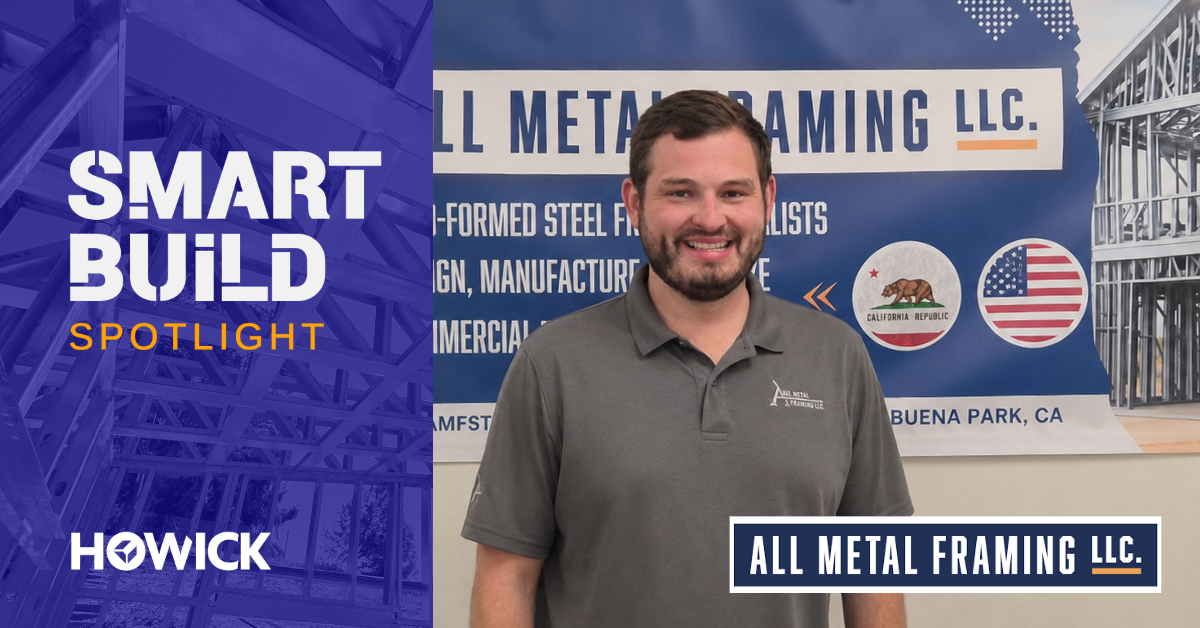
Welcome to SMART BUILD SPOTLIGHT, where we go behind the curtain with the businesses reframing how the world builds. In each episode we meet a construction trailblazer combining people, process and technology in unexpected ways - and getting results that turn heads. Some have decades of experience; some are barely out of the gate. What they all share is a refusal to build the way it has always been done.
In this episode, we meet Michael Ferlaino, Co-Founder of All Metal Framing - a Southern California company that came to cold formed steel framing unconventionally. Most roll-forming businesses start out as framers and then learn the machinery; Michael and his business partner Adam did the exact opposite. This is the story of two mates meeting at an off-roading club at college, then with no construction background, teaching themselves to frame and building a successful steel framing business in just five years.
No time? Here is the quick version:
- From complete beginners to industry leaders: Two friends with no construction experience built a thriving steel framing business in just five years.
- Learning by doing: They taught themselves framing from scratch using training, software and YouTube, proving curiosity can be a powerful advantage.
- Why they chose Howick: After comparing manufacturers, they selected Howick for its reliability, support and long term performance.
- Growing one project at a time: Starting with small residential projects, they quickly expanded into luxury homes, multifamily construction and major commercial work.
- Fire resilience and speed matter: Following California's devastating wildfires, panelised steel framing is helping deliver faster, more predictable re-building.
- Thinking like manufacturers: Digital workflows, lean production and local manufacturing enable exceptional accuracy, certainty and rapid turnaround.
- The next big challenge: Their latest project requires 2.8 million pounds (1,270 tonnes) of steel, delivered through collaboration with other local manufacturers with Howick machines.
Contents:
- From fixing Toyota off-roaders to structural steel manufacturing
- What is a jack stud? Learning framing from scratch
- Choosing Howick: “The greatest decision we’ve ever made”
- From starting small to supplying to the big leagues
- Their own definition of lean manufacturing
- Just like graphic design
- From 40,000 pounds of steel a year, to 2.8 million in one job
From fixing Toyota off-roaders to structural steel manufacturing
Michael and his business partner, Adam, now run both All Metal Framing, and Arc Made Fabrication – a welding, structural fabrication, architectural fabrication, and machining business. Despite that, they did not know a single thing about steel or framing when they met at an off-roading club in college:
"The motivation for starting the company originally was that we were tired of paying people to weld on our vehicles … paying these shops hundreds of dollars an hour to do simple little welds for things that we broke on a trail.";
After university Adam decided to go to welding school and learn the trade and Michael started wondering – what do we have to do to start our own welding shop?
They realised very quickly that their company needed Computer Numerical Control (CNC) capabilities, so they got a plasma table, and became the only small shop in their area with the ability to plasma cut. What started as car parts expanded into construction components, and structural steel, and that part of the business snowballed.
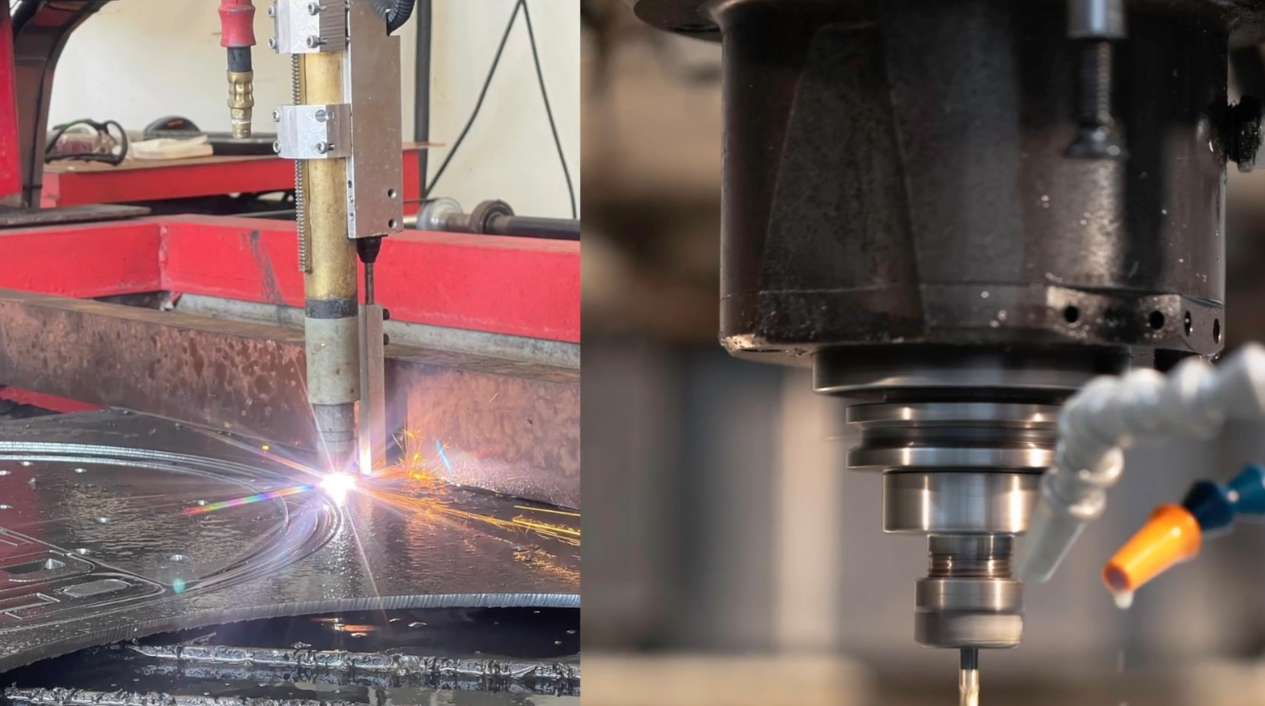 Image courtesy All Metal Framing
That is when a couple of builders approached them and asked: would you consider light gauge steel framing? Now most reasonable people might say, sorry we do not know the first thing about light gauge steel framing - but Michael and Adam have a strong propensity to adopt new technologies and quickly master complex concepts. So, they started looking into it:
"We did everything on a 'how hard can it be' mentality… we'd only continue as far as we could before we hit a major roadblock. Let's just keep going, let's see what happens."
What is a jack stud? Learning framing from scratch
With very little framing knowledge, Michael and Adam had a lot to learn, and fast. So, they took every opportunity to learn, including during training sessions with StrucSoft, the company providing the software they were using to do the detailing for framing:
"She [the trainer] said, this is how you add a jack stud. And I'd go — okay, that's awesome. What's a jack stud? I'm asking her … Why do I need to know this? Where does this apply?"
Michael also leaned heavily on digital tools and YouTube:
"When we went to actually build our first house … We had MWF and Revit open on one screen and we had YouTube open on the second screen teaching us how to read plan sets and how to frame a house.”
The way the All Metal Framers founders learnt was the opposite of how it was usually done (which explains the steep learning curve). Most have construction, framing installation or roll-forming backgrounds, then learn automation machinery and computers - Michael and Adam had machinery and software knowledge, but had to learn how to frame from scratch.
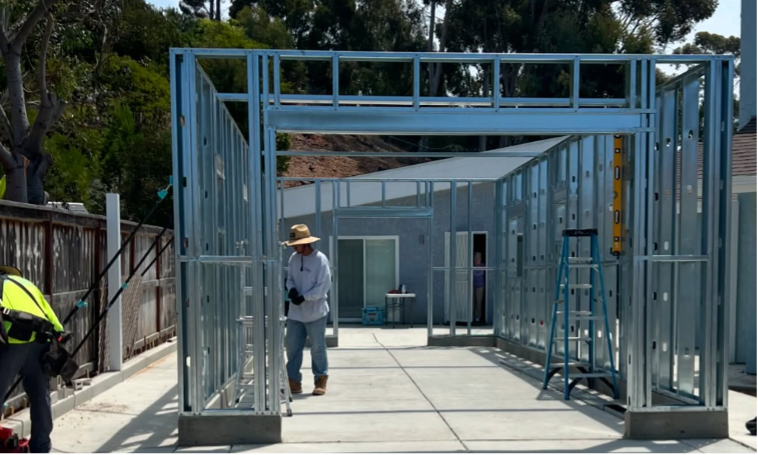 Image courtesy All Metal Framing
Once they had done their research and realised there was potential in this steel framing technology, the next thing they needed was a machine.
Choosing Howick: "The greatest decision we’ve ever made"
When he started making calls and visiting factories to find the right machine, Michael was only 25, which proved problematic. He explains that none of the competitors took him seriously as soon as they heard his young voice, except for Howick – JD Standridge (Howick’s US Regional Manager) just asked him what he wanted to do and got on with it.
After answering all his questions, JD then asked if Michael wanted to go to a factory that had Howick machines. Michael agreed, and the company showed Michael how everything worked, including the data workflow, and all the secret recipes and they generously also welcomed questions.
Michael's go-to test at every factory was simple: ask to see the spare parts list. A machine that breaks down often needs a big stockpile of spares; a reliable one barely needs any. At one competitor's factory running non-Howick machines, he was shown two units that had been stripped entirely for parts, plus a room the size of a shipping container packed with spares — bearings, oil sensors, even the rollers themselves, all of it kept on hand because it was bound to be needed:
"When we went to the local Howick company, they laughed and made a joke about, well, I guess we did have to replace the shear blade, but that was after a million linear feet"
Michael and Adam chose Howick and almost five years later they swear by the machines – he says you can literally see and hear the difference:
"It was the greatest decision that we've made. We're now fortunate enough that we're friends with a lot of roll-forming facilities that are both using Howick and the competitors' machines. And we see the differences side by side. You can literally close your eyes when you're standing next to the machines and listen to them run. You can hear the difference."
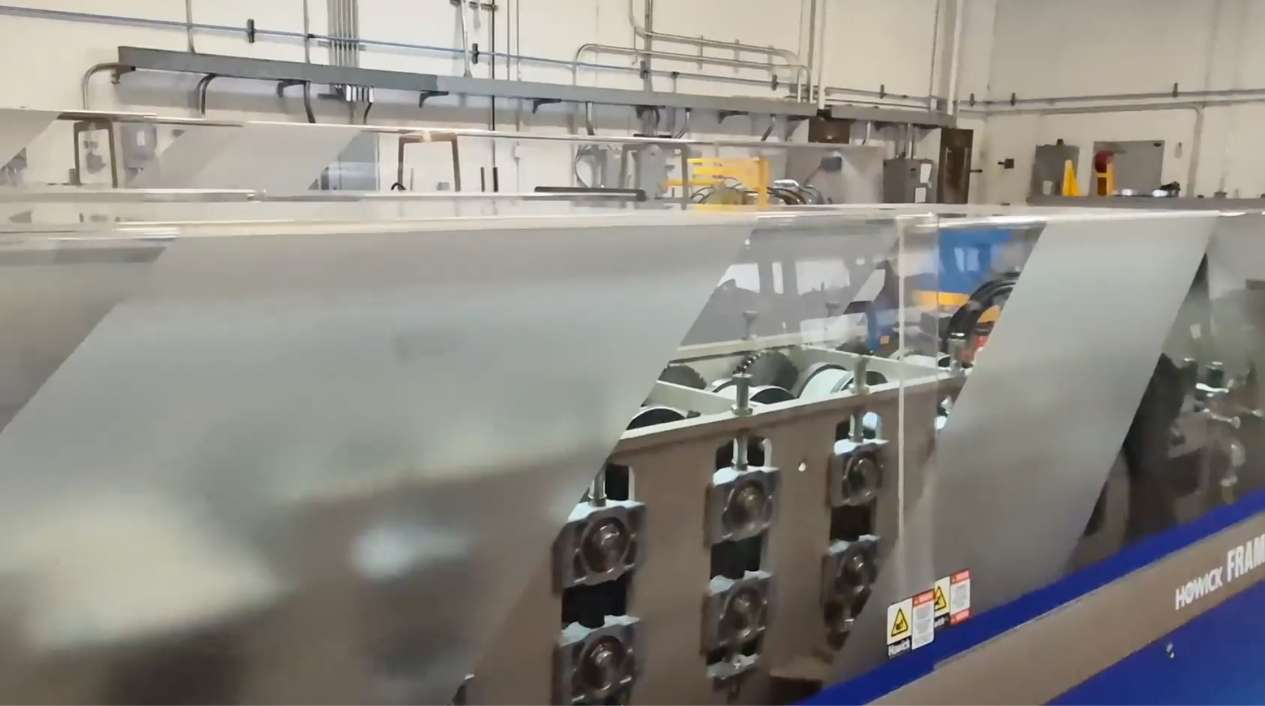
Image courtesy All Metal Framing
"[That] is what leads to the machines being more efficient, which then leads to them running longer for us without having downtime."
From starting small to supplying to the big leagues
The All Metal Framing team were fast learners, sure. But when their first machine arrived they very sensibly figured out that it was best to start as small as possible with additional dwelling units (ADUs) and keep learning on the job.
The logic was that if they were to make a fatal error on an ADU in the framing portion … it would not bankrupt them.
Michael and the team figured out their Howick machine, their processes, and perfected the dynamic with their structural engineers quickly, then broke into residential, then luxury residential, then multi-family.
Michael and Adam started with no framing knowledge, so they had to crawl before they could walk.
They went from crawling to running fast — and word of mouth did the rest. A good portion of that early demand growth traces back to the wildfires that tore through their hometown in Southern California. People were looking for a way to build Class A, as cost effectively and as fast as possible.
Class A means a fire-resistant structure. When steel framing is incorporated into a non-combustible building envelope with materials like magnesium oxide (MgO) board, fibre-reinforced concrete or Sureboard, it delivers the fire resilience homeowners are chasing - far better than traditional timber framing can.
Michael explains that when everybody's house burned down in the Palisades and Altadena fires, their insurance companies only gave them two years to rebuild. Traditionally, framing a home in LA takes months — time these families did not have, with subsidised housing running out and full rent plus a rebuild looming. Panelised steel framing changes the maths on every front. It is faster, it is cheaper, and it is certain:
"By going with panelised steel framing, we're taking what was months of framing time and condensing that down to a week or less, getting these structures built incredibly fast and traditionally under budget. We can walk into a project, look you straight in the eyes and say down to the ounce how much your house is going to weigh, and down to a five-count how many screws are going in the entire structure. That's a level of certainty virtually no one else can compete with."
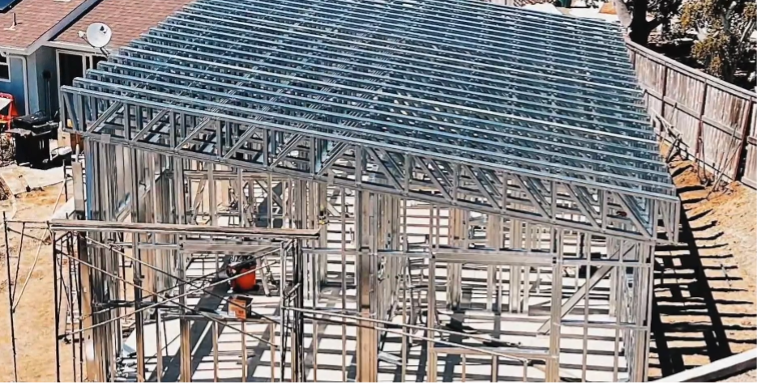
Image courtesy All Metal Framing
Being local seals it. All Metal Framing is rarely more than 35 miles from a site, so where rivals might wait six weeks for panels shipped from India or China, Michael can turn one around in a day. Everything is produced locally and can be on the job site on the same day. If there is an issue or the customer decides they want to change something, Michael explains he can just make another panel and bring it to site. Simple.
Their own definition of lean manufacturing
When we toured the All Metal Framing factory, Michael affectionately gestured towards their Howick machines and called them ‘his babies’. There are three, including two Howick FRAMA™ 3200s and a FRAMA™ 7800, and they produce an immense volume of product per month.
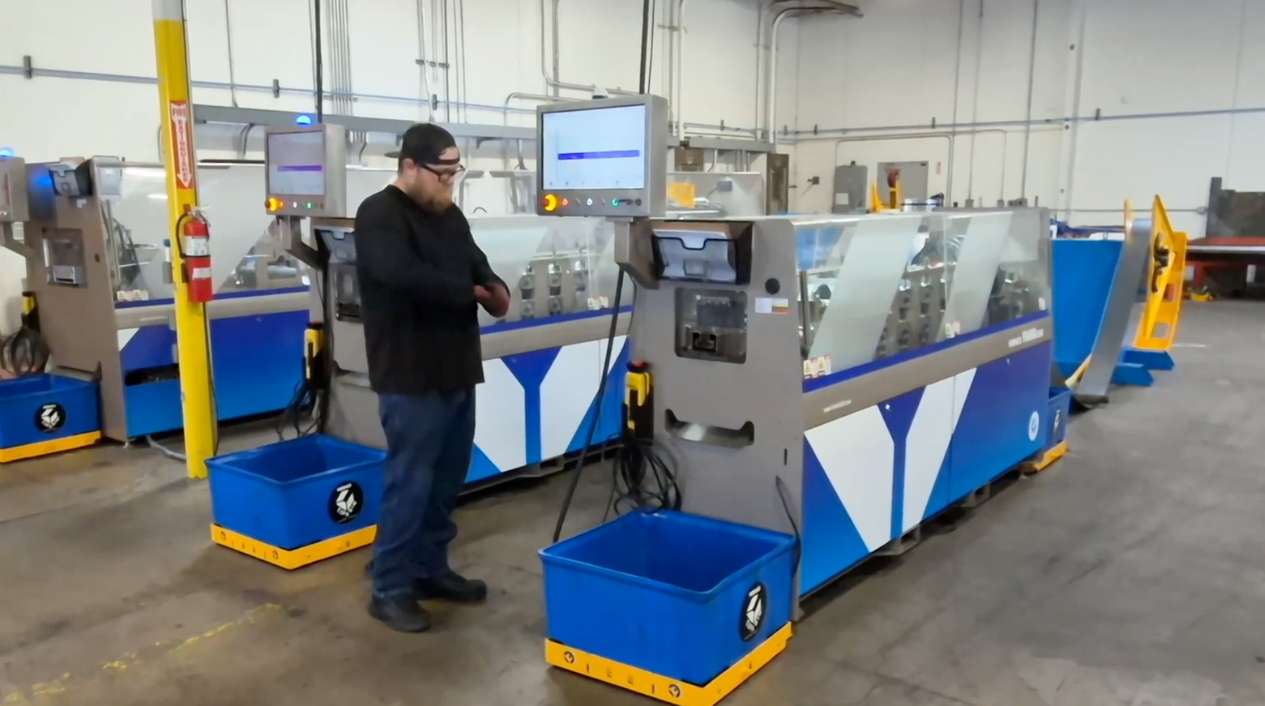
Image courtesy All Metal Framing
Right now, 95% of their production is panelised studs, with just five staff on the floor, plus three drafters - a crew that could not be any leaner. All Metal Framing may be small now but growth is coming fast – they are expecting to double the size of their crew soon – requiring about 40 people in production to assemble the panels as fast as the machines can manufacture them.
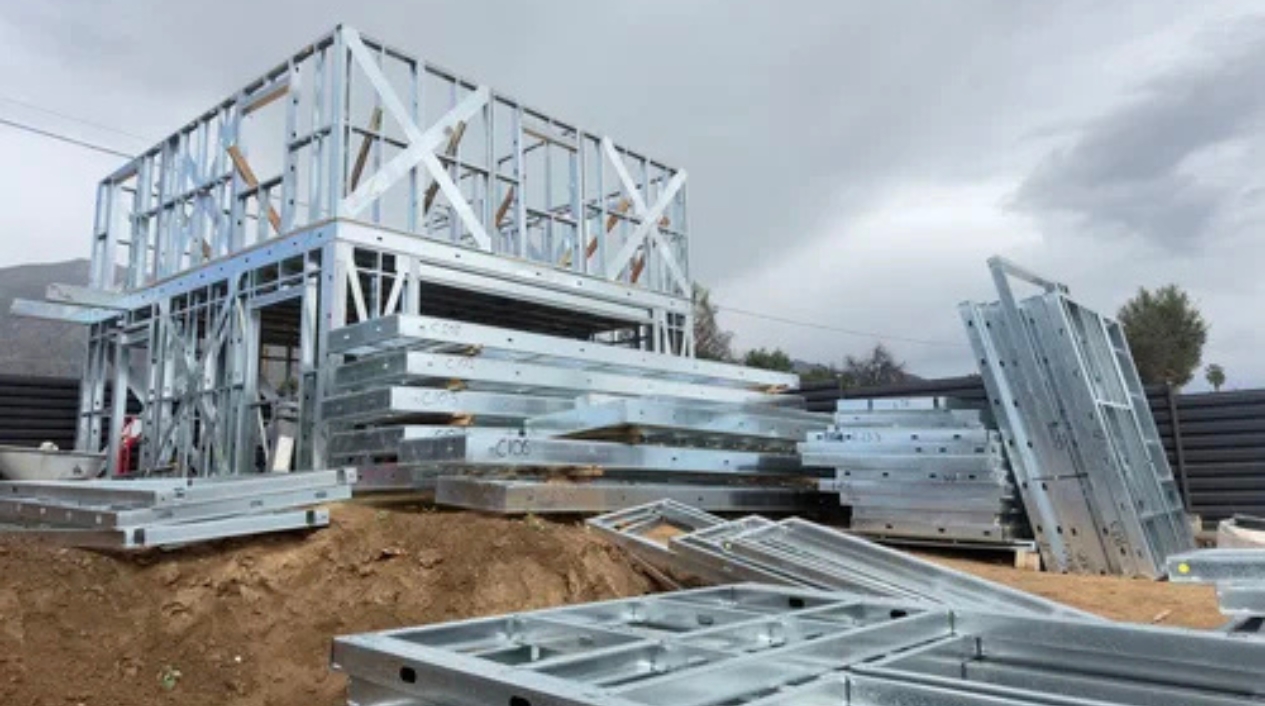
Image courtesy All Metal Framing
Just like graphic design
Michael has found that he has needed to educate others on the model-to-manufacturing process:
"Especially with our architects, we explain that our framing process is not a traditional framing process. Instead, you need to liken it to graphic design … We're making a model and that model is an exact replica of what we're going to be making on the roll-formers. So architects love that because we're able to actually create what their vision was."
From 40,000 pounds of steel a year, to 2.8 million in one job
Have a look around the compact, bustling All Metal Framing facility and their fast learning, adaptable approach is obvious. And funnily enough, it is perfect for what they are trying to achieve:
"We're like TSA. See something, say something. If you can think of a better way to do it, tell me. There's no such thing as a stupid question around here … as the company grows, as we get bigger, of course, that atmosphere is probably going to go away and that culture is going to become a little bit more rigid and we'll start falling into systems."
Part of their current approach is a focus on hands on knowledge. When a machine goes down, all five guys on the factory floor stop and work on a solution. This is to ensure that each of these five guys will be able to run their own team when the company grows, and they will know their machines inside out.
The approach is clearly working. Standing inside their factory, hearing the buzz of Howick machines you cannot help but feel you are standing on the ground floor of something big. The business has grown 40% year on year since it started and their last order was two times greater than the biggest steel orders they have ever had. This week alone All Metal Framing are bringing in 100,000 pounds (453,592kg):
"To put things into perspective, our first year that we were in production, I don't think I brought in 40,000 pounds (18,144kg) worth of coil all year long. We have a project that if everything goes to plan at the end of this year, the steel requirement is 2.8 million pounds (1,270 metric tons)."
That is a seven-storey project in Southern California near San Diego that the company plans to deliver inside three months. They believe they can manufacture all the framing required for this project themselves, but they would have to put every other customer on hold to do it. Instead, they are taking a different approach and pooling manufacturing capacity across three local roll-forming factories, all running Howick machines.
For Michael, that collaboration is not unusual. While many industries guard knowledge and capacity closely, he says their local steel framing community has adopted a different mindset – that of collaboration not competition.
The upcoming project is a perfect example. Because each factory specialises in different profiles and project types, they are not fighting over the same work. Instead, they can combine resources, spread production across multiple facilities and tackle projects that would be difficult for any one company to deliver alone.
Rather than competing for a smaller share of the market, they are creating capacity that allows the entire sector to take on bigger opportunities. As Michael puts it:
"Together, we’re all getting fat and happy."
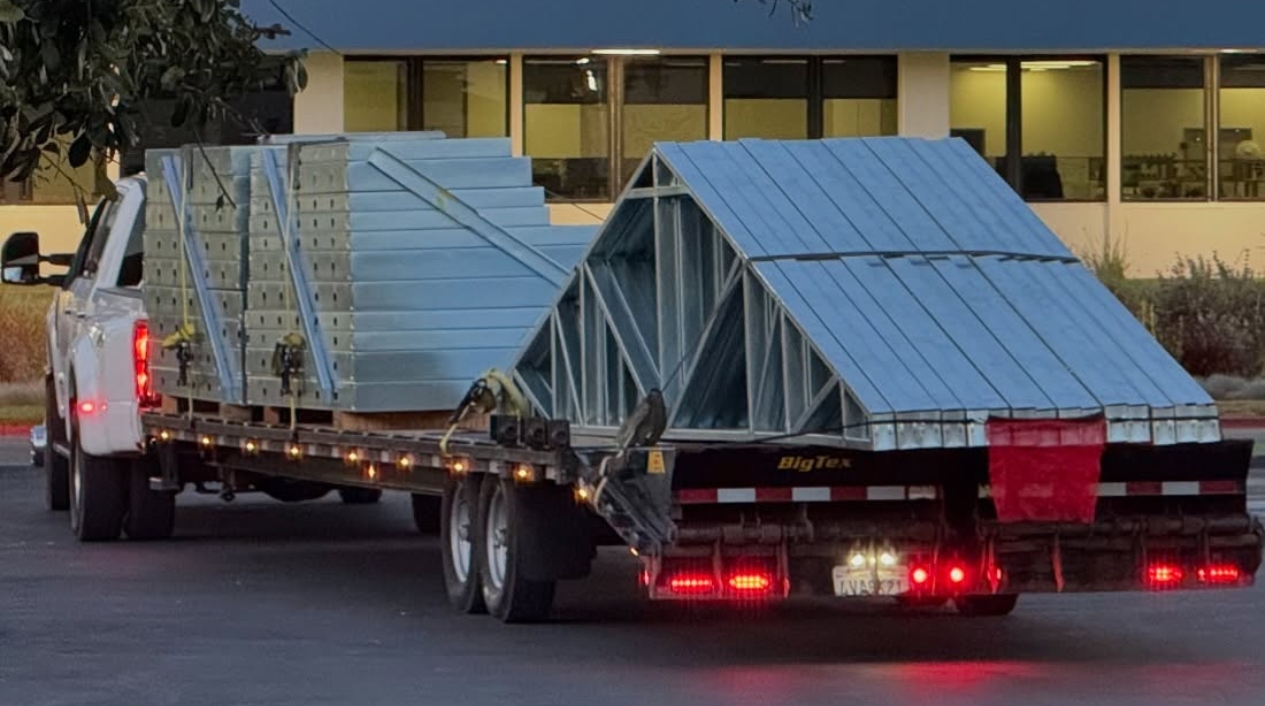
Image courtesy All Metal Framing
Michael says that the company’s growth in a tough market is hard-won, but the fact is, their offering is simply that much better than other framing methods. And according to him, to change behaviour it has to be 10x better:
"It can't be twice as good. It can't be three times as good. It has to be 10 times better because there's so much risk. And with the roll-forming and the steel framing, we're proving that."

All our SMART BUILD SPOTLIGHT episodes are now available on our YouTube channel.
We travel around the world and meet with industry trailblazers to explore how they are pushing the boundaries with smarter construction methods. Each episode gives you a behind the curtain look into how different businesses combine people, process and technology to achieve outstanding results.
If you haven’t already, subscribe today and immerse yourself in thought provoking content.


