SMART BUILD SPOTLIGHT: Mytikas Industries – Building beyond the housing shortage
⏱️ 8 min read
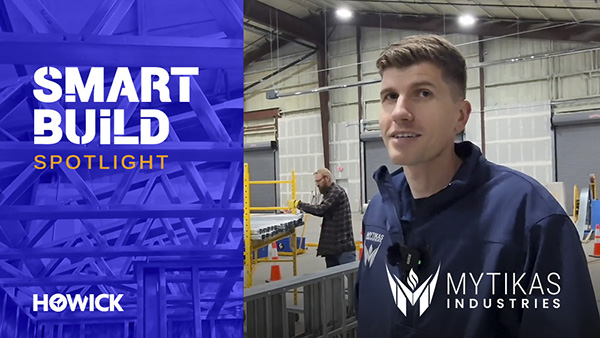
Welcome to another edition of our SMART BUILD SPOTLIGHT series, where we go behind factory doors to see how industry leaders are transforming construction through innovation, automation and smarts in manufacturing.
This time we are heading to Florence, Colorado, where a startup manufacturer has turned a long dormant factory into a solution to one of the United States' most challenging housing issues. Meet Howick customer Mytikas Industries.
Named after Mytikas, the highest peak on Mount Olympus, the company embodies ambition, resilience, and a commitment to building something of lasting value. These principles carry through everything Mytikas creates, reflecting a broader vision to challenge convention and raise the standard of modern housing.
In under three years, Mytikas Industries has taken a factory that sat empty for nearly three decades and turned it into a high-tech construction manufacturing facility, with plans to scale to production of 250+ kit and tiny home units a year. We talked to co-founder and CFO Eric Bonick about the journey.
No time? Here is the bite-sized version:
Discover how Colorado-based Mytikas Industries is planning to use roll-forming framing automation and light gauge steel to build high quality, code-exceeding homes faster, more efficiently, and at scale, helping tackle one of construction's biggest challenges: housing supply.
Contents
- Startup mode
- From Space Force to housing innovation
- There is nowhere to live
- Engineered to exceed code, everywhere
- Steel: An obviously superior alternative
- "This is the machine we need. Here's why"
- A singular focus on quality
- What is next? 250, 500, 1,000 units a year
Startup mode
In 2023 in the heart of Florence, Colorado the building that is now the Mytikas Industries factory was sitting empty, and had been mostly abandoned for 28 years.
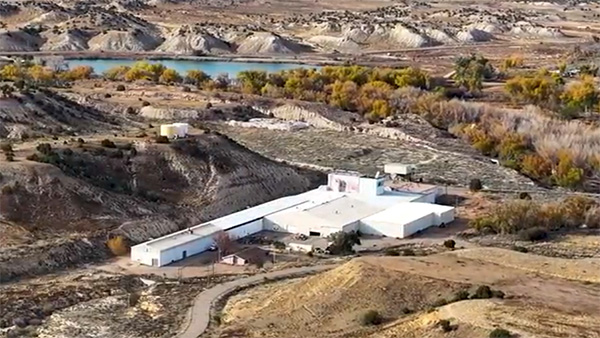 Image courtesy Mytikas Industries.
What was a hollow shell is now a hive of activity. But Eric says this transformation did not happen right away, in fact it took the better part of two and a half years:
"We've put in a tremendous amount of capital to turn this into a modern facility so we could start a production line of all the cool things that we're trying to do with the Howick systems."
"But now that we're up and running and we have a facility, it's pretty nice."
Nice is an understatement. As we talk, a Howick machine runs constantly producing precision cut framing, next to an almost-finished tiny house that will exceed most residential building codes in the country. And what started as a dormant structure in the middle of a bare landscape, next to the Arkansas River, is building into a company that is aiming to produce more than 250 housing units a year.
The plan is to produce the highest quality, fully finished tiny homes, with kitset homes coming soon. But Mytikas is not just building tiny and kitset homes. Alongside finished units, they supply light gauge steel (LGS) framing to other builders who need material for their own projects, including panelised wall systems, pre-framed, insulated walls ready for tilt-up installation onsite. Eric says, whatever format a customer's build process needs, Mytikas can produce it.
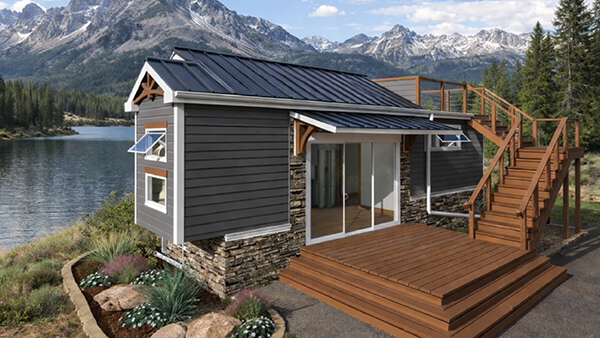 Image courtesy Mytikas Industries.
"We will work with anybody in the building space so we can give them a better product from these machines. Other tiny home builders, modular home builders, whatever, we're agnostic. We just want to get the material to as many consumers as possible."
From Space Force to housing innovation
Eric might be at the forefront of housing innovation in Colorado, but his path to construction was anything but conventional. Before Mytikas, he served on active duty in the United States Air Force and Space Force for 10 years, including stints as a drone pilot and in nuclear weapons acquisitions.
At the same time, he had been working nights and weekends on real estate developments, starting a private equity fund investing in real estate, then eventually co-founding Mytikas. He recently transitioned out of the military to focus on Mytikas, fulltime.
He joined Eli Bremer (CEO), a local entrepreneur who has also served in the military, Ed Libby (Chief Construction Officer) a construction expert with 50 years of experience, and Whitney Kroneberger (Director of Operations). When the founders got together, they all had plenty of experience in real estate development and one thing in common:
"We could not find companies out there that could deliver a high-quality product within a timeframe we needed, nor within a price point that made sense."
"That really started us down the path of having to get vertically integrated, to develop projects, we needed to be able to control the manufacturing and material supply."
There is nowhere to live
Colorado has a housing shortage of around 106,000 units, according to state estimates. Roughly 34,100 homes a year need to be built just to stop the deficit from expanding:
"You have communities where they can't get workforce because there's nowhere to live. People are commuting an hour, two hours one way just to get into a community where there are jobs."
This is what drives Mytikas. In their ambition to help solve the housing shortage, they are talking to businesses stateside, including RV parks, campground operators, and larger business owners that have no housing for their workforces. For instance, they have met with entrepreneurs in Wyoming looking to place 54 units on their property.
In addition to shortage, the housing challenge is even more complex than it seems at first. Wildfire danger and high insurance premiums mean that the requirements for new structures are extremely high, which drives prices up even further. In Colorado cold, wet, snowy winters means there are maybe five months of building window for traditional, outdoor construction.
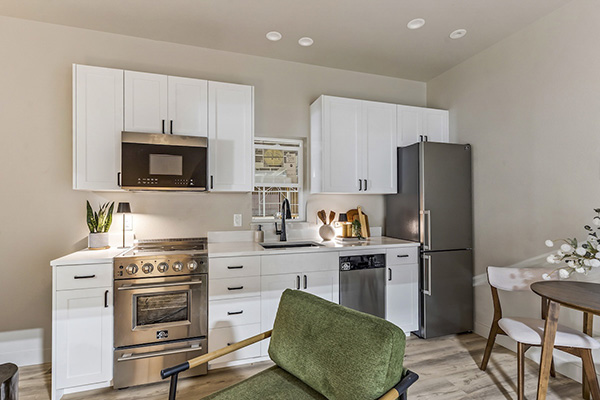
Image courtesy Mytikas Industries.
Turns out, offsite light gauge steel framing is a solution for all of these problems:
"We're able to build a turnkey product in the factory, panelise solutions, it allows us to keep cost down because we can build 365 days a year then deliver to the customer as needed."
"We use Class-A fire rated insulation material. Steel obviously speaks for itself, it doesn't burn like wood."
Engineered to exceed code, everywhere
Colorado's housing problem is acute, but it is not unique in the US. Plenty of other states are facing similar challenges, so Mytikas is planning to supply beyond their local area. The problem with doing that is that each state, and often each municipality, has its own housing standards. Mytikas' solution? They simply engineer beyond every code in the country so the same unit works regardless of climate or jurisdiction.
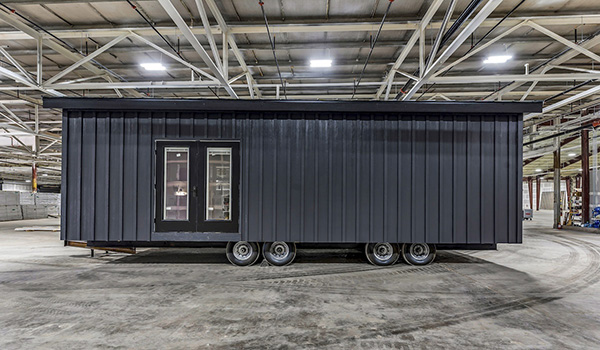
Image courtesy Mytikas Industries.
This starts with insulation. Mytikas' units have closed-cell foam product rated at R7 per inch (25.4mm), packed into a four-inch (101.6mm) wall cavity, providing R28 in the cavity alone, plus a continuous insulation envelope adding another R5:
"Your R value is sitting at about 33, your U value is probably mid-20s, which is better than most residential construction in the country."
That insulation is great for all climates, but especially high altitude alpine environments. In these more extreme locations, normal split systems for temperature control do not cut it either, so every unit runs central heating that can hold a comfortable temperature regardless of outside conditions.
The structure itself gets the same treatment. In their factory environment, they tested one of their structures by putting 6,000 pounds (2721.5kg) pressure on it and seeing zero deflection, outperforming even what their own engineers were calculating.
"And that was only using 18 gauge steel. We can go all the way up to 12 gauge, which is just shy of an eighth of an inch thick (3.18mm)."
"We're over-building this thing to just work wherever somebody wants to place it. If we just build it to exceed the standards across the board, it gives ultimate flexibility to the customer."
Steel: An obviously superior alternative
One of the early decisions the team had to make was to choose a building method. In charge of making the decision was Ed Libby, CCO, a man who has built everything from casinos to custom luxury homes in 43 states in his 50 years working in construction.

Ed Libby, Chief Construction Officer - Image courtesy Mytikas Industries.
Over his long career, he watched the quality of lumber decline. It was weaker, with more faults, and would warp and distort much more often. These inconsistencies were causing up to 15% material waste (whereas now with light gauge steel and their Howick machine they are producing less than 2% waste, and that is recyclable).
Steel was an obviously superior alternative, Eric explains:
"You don't have warping, distortion, shrinkage, after you frame a house. When we create a structure with the LGS, it doesn't move. The geometry of the structure, when you put pieces together, you can actually get it to be 90, the walls are straight and everything else kind of just dovetails in very nicely."
"This is the machine we need. Here's why"
In the end, LGS was an easy choice, but selecting a machine was a little trickier:
"Ed went around the country, looked at all the competitors out there globally and he has seen what Howick delivers and he said, no this is the machine we need. Here's why."
What made the decision for Ed in the end was simple, reliability. If something goes wrong, there is no need to wait weeks for a technician: the Howick machine could be serviced quick and easy by the inhouse team at Mytikas.
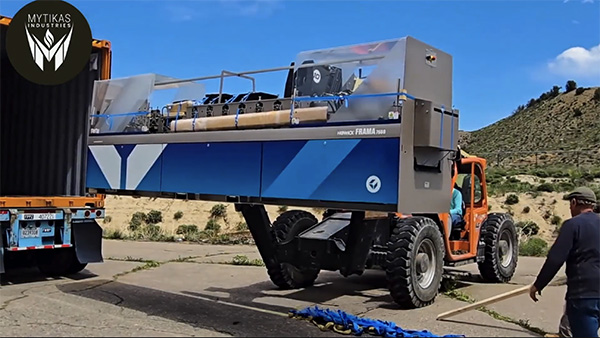 Image courtesy Mytikas Industries.
For a startup betting its entire production capability on one machine, this mattered just as much as quality or output. Mytikas procured two machines from Howick to ensure they could meet customer demands. Ed explains that the Howick can produce just about everything Mytikas needs, from 3.5 inch (88.9mm) studs to 14 inch (355.6mm), covering the full spread of framing, joists, and wall assemblies they need for everything from tiny homes to large multi-family builds.
"It's incredibly capable and it's a workhorse."
A singular focus on quality
Quality is the single focus that drives everything else. Eric says they have built a culture on that:
"The biggest thing that we're focused on is quality. I don't want a callback. I want these housing units for somebody to buy it and then their kids can live in it, and then it's still in a great condition."
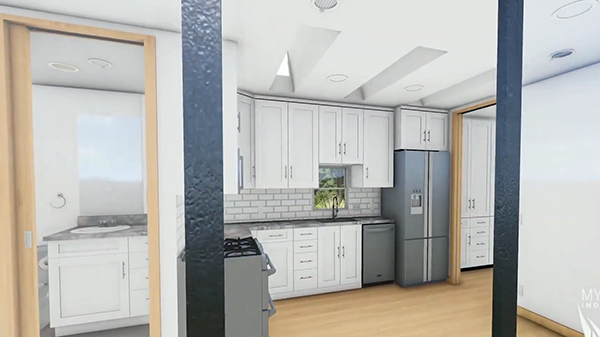 Image courtesy Mytikas Industries.
That focus is attracting people, too. Mytikas has had no trouble finding workers who want to be part of what they are building. But the workforce housing shortage that Mytikas is trying to solve for its customers is one they are facing themselves, so they are considering solving it the same way:
"One of the things that we want to do is acquire some land, do a tiny home village, drop 40, 50 of these things with a really nice design and a community amenity there. Now I have 50 dwellings for people to live at and then work here too."
What is next?
It is early days for Mytikas, they are still getting their ducks in a row, lining up their marketing efforts, getting certifications, and making connections with other businesses. But there is huge potential for the business to grow:
"Our factory, the way it is right now, we're pretty confident we could get two lines. Maybe as many as four. One line could do 250 units a year."
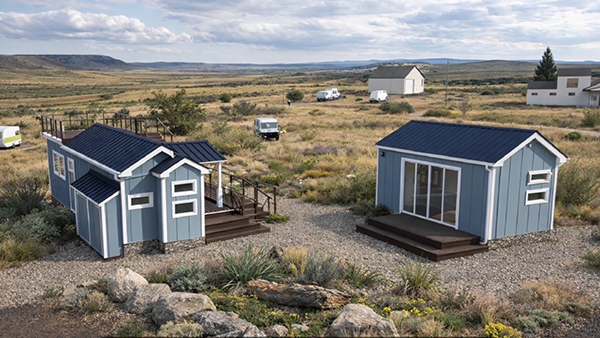 Image courtesy Mytikas Industries.
The vision from here is to transform into a very large manufacturer, and Eric says if they can scale and sell effectively, the demand is there. Even if they were to produce 1,000 units a year, they would not touch the sides of the housing shortage nationally, or even in their home state:
"There's a lot of people that operate Howicks. This isn't a scenario where any one of us singularly solves the housing problem, the demand for construction is so high that there's room for everybody."
For now, Mytikas is still one factory in one Colorado county. But the phone keeps ringing, other builders, businesses in other states, people who have heard what Mytikas and the Howick machine can do. Eric's answer to all of them is the same:
"More than happy to work with any other consumer out there, just send us the files. I'll print it."

All our SMART BUILD SPOTLIGHT episodes are now available on our YouTube channel.
We travel around the world and meet with industry trailblazers to explore how they are pushing the boundaries with smarter construction methods. Each episode gives you a behind the curtain look into how different businesses combine people, process and technology to achieve outstanding results.
If you haven’t already, subscribe today and immerse yourself in thought provoking content.


