SMART BUILD SPOTLIGHT: Revolution Steel – One-off luxury homes, repeatable precision
⏱️ 5 min read
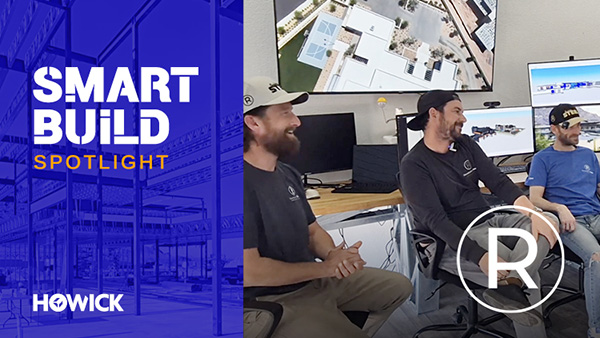
Welcome to the latest SMART BUILD SPOTLIGHT, where we go behind factory doors to find out how smart construction businesses are innovating to gain a competitive advantage and push the boundaries of industrialised construction.
This time we are looking at how Arizona-based Revolution Steel went from a Howick machine in the back of a trailer to a successful luxury home framing business.
Unlike most roll-forming operations, which are built for repetition and volume, Revolution Steel specialises in fully custom ultra-luxury homes - and they handle everything from modelling, site preparation through to framing installation and handover.
The process may be new to the local market, but the quality and results are self-evident - inspectors frequently hand out a green sticker, then get curious and ask "Hey, can I have another look around?"
No time? Here is the bite-sized version:
- Revolution Steel has carved out a niche building fully custom luxury homes using cold formed steel framing and Howick roll-forming technology.
- By combining 3D modelling, front loaded planning and an open software approach, the team delivers faster, more accurate construction with fewer onsite issues.
- Their story proves industrialised construction is not just for high volume projects - it can transform bespoke residential building too.
Contents
- Two Ryans: One big idea
- Why Howick? The open language advantage
- Framing automation goes custom: "They're all little mini puzzles"
- How Revolution Steel gets better with every project
- Early contractor and trades involvement
- The cold formed steel appeal for luxury, bespoke homes - 'it's shiny'
- The real benefits of steel
- "The Phoenix market is perfect for what we do"
Two Ryans: One big idea
Ryan Patten was running Arcadia Builders when he met Ryan Larkin, who was into large scale manufacturing of custom furniture (a match made in offsite construction heaven).
They shared a vision that there was room for improvement in the construction industry - and that manufacturing with cold formed steel was the next avenue for innovation. They hired Mike Parnell (Director of Production) to run production and Revolution Steel was born in January 2020.
Initially, the idea was that they would take the roll-forming machine on a trailer to jobs and produce the panels onsite. This approach has since been abandoned, but early on their associates in the industry could tell they were on to something. Like Ben Starr, Revolution Steel Operations Manager, who was working as an electrician when he met the Ryans on a job site:
"Me and my boss, we came over to hook up the power for the machines ... And I thought it was the coolest thing in the world, to be honest."
Soon after that, Ben joined the team and they built their first house. He felt like it was 'too easy', which is not a phrase you hear often in construction. That gave them a boost:
"I stuck around because I wanted to see it play out. I could tell the two Ryans couldn't have done it by themselves. The stuff that Mike and I went through just to get here is tough. It wasn't any one of us - it's been a really big team effort."
The second house they built was more challenging, because their installation crew were unavailable. Instead of delaying, Ben and Mike took a crew of guys from their manufacturing floor and sent them to the site. The crew had next-to-zero construction experience (except for Mike and Ben), but despite that, they were able to frame a luxury house to a high standard, and in good time. That is the wonder of cold formed steel framing automation - and front loading the work with 3D modelling.
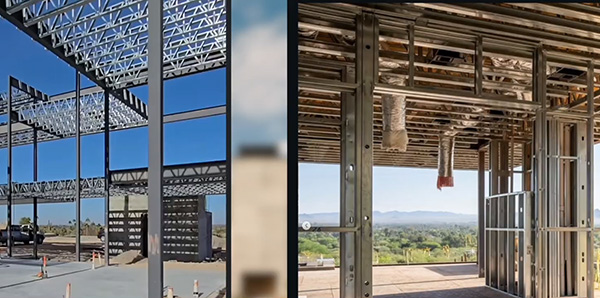
It was also a valuable experience because the manufacturing team got to understand both sides of the process, and the reasons why they did certain things:
"There's a certain set of guys out there [in the factory] that they know exactly why we're doing certain things here and they appreciate why we do it. They know that if it's not done a certain way, it's harder to do in the field."
Why Howick? The open language advantage
When it came to choosing a roll-former, Ryan Larkin did his research. A contact suggested another manufacturer's machine, but when he looked into it, it was clear that machine was not the right fit. Revolution Steel's business model requires constant iteration, so being locked into proprietary software was not an option - Howick's open language approach was the clincher.
Ben remembers the first time he saw the machine, still in the back of a trailer before he had even joined the company, and he has been a convert ever since:
"There's a machine that you can design parts on the computer and then they print, cut to size, and you just pop them together. I was extremely jealous."
Framing automation goes custom: "They're all little mini puzzles"
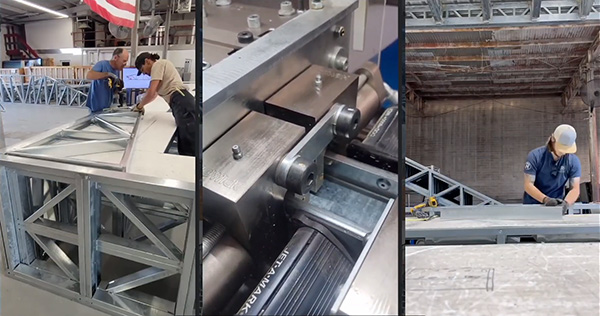
At the start the processes were new to Revolution Steel. But that did not matter - their team was full of problem solvers who learnt on the job. For example, Ben learnt to build digital models in his spare time, just for fun (and found it easy because of his construction background).
Meanwhile, along with Ben, Mike worked on optimising their factory floor layout to improve efficiency:
"We track weight, how much linear feet was run that day, how many panels - so we could really improve, find out where we were going wrong and see the opportunities for improvement."
Mike says one of the most interesting parts of the entire set up is that they are not running a typical cold formed steel, offsite model. The homes they build are 100% custom:
"We don't do a lot of repetition, especially in the custom build. They're all little mini puzzles. Problem solving is extremely valuable."
How Revolution Steel gets better with every project
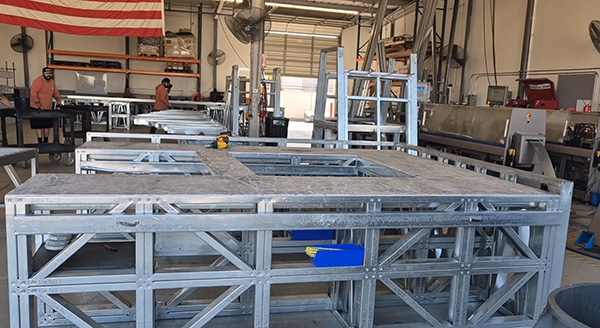
All this iteration and improvement was driven by a culture of accountability. Mike and Ben did an end of day report to show the Ryans and they wanted to show an improvement every single day:
"It drove me and Mike to do better and to prove we could do more."
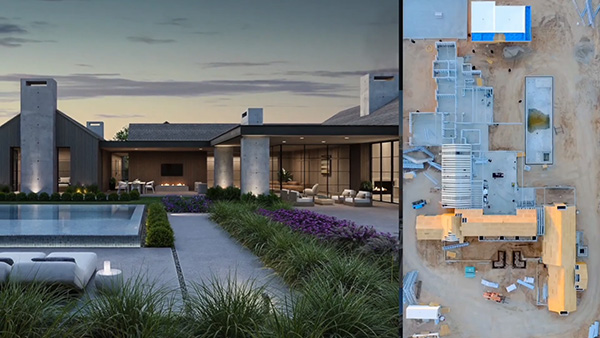
The optimisation and improvement occurs before a single machine is turned on, according to Daniel (Dan) Starr, who was a superintendent for Arcadia Builders before he joined Revolution Steel. He gets out to the site before the slab is done, when it is just dirt, to make sure everything is accurate - then they front load the work as much as possible.
Early contractor and trades involvement
Part of that front loading happens on a computer with 3D modelling, and in their meeting rooms, when they get contractors involved early. This allows them to work out all the tiny details in advance, so that when they get to the site, everything fits together seamlessly:
"They [the trade contractors] were standoffish at first - like, we're going to go to a framer's office? And then by the end it's a 45-minute meeting. They don't realise how beneficial a 3D image is."
Now these pre-build meetings are standard with all the trades, from HVAC to plumbers and electricians. Each trade shares notes and checks the model, then this is incorporated into the model that goes to production - the end result is a smoother build and a model that translates almost exactly into a finished build.
The cold formed steel appeal for luxury, bespoke homes - 'it's shiny'
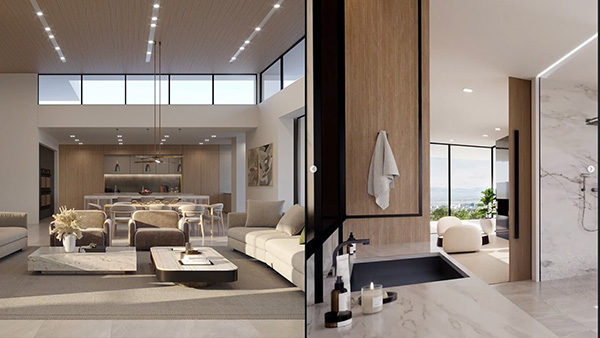
Offsite manufacturing and cold formed steel are frequently used to build repeatable structures, because the efficiencies of the technology shine through in these applications. Revolution Steel has taken a different approach - almost everything they build is 100% custom.
Mike says the benefits of using cold formed steel framing are still obvious:
"Perfectly true walls and hallways. They're fire resistant. There's no termites, we're hurricane rated. We're renewable, recyclable. There's less garbage on the tips."
While all of these benefits are compelling, the fact is, what attracts people to Revolution Steel is a lot simpler.
And it is not hard to see why demand is growing. In the Scottsdale luxury market, steel framing has become something of a status symbol. Neighbours walk past job sites and stop. Other contractors onsite ask questions. Homeowners who have already built wish they had done it differently.
"One guy builds a big steel house. His friend's got to build his out of steel too - you can't not one-up your friend."
"Rich people like shiny things."
The team is the first to admit that the technical benefits of cold formed steel - perfectly true walls, fire resistance, no termites, hurricane rating, recyclability - are not always what closes the deal. Sometimes it is simpler than that.
"The speed of it going up. And it's shiny. The framing looks really good."
The real benefits of steel
But once clients and contractors see it up close, the conversation shifts quickly from aesthetics to performance. Inspectors who show up expecting a standard framing check end up asking if they can look around. Other builders have started knocking on Revolution Steel's door asking if they will manufacture for them too.
That appeal is great for winning new business, but where their process really shines is making everyone's life easier onsite - and speeding the whole project up. Everything is straight, lighting layouts are marked onto the floors, outlets and lights are already cut into framing, plumbing locations are planned for:
"When these trades come into the house they have a plan - an idea about what they're walking into rather than being blind."
Thankfully the team has their processes locked in, because the appeal of roll-formed steel has helped them grow rapidly. In early 2025 they had 10 or 12 people, many of whom were cross-trained in the shop and for installation - just 16 months later their crew size has almost quadrupled to 40.
Revolution Steel's culture reflects that same commitment to quality. Shop workers are taken out to see the completed framing, and the team holds barbecues onsite before handover to celebrate what they have built together. For some of the newer guys, it is the first time they have ever set foot inside a home like this.
"It puts everything into scale. There are guys that do construction their entire lives and never get to build something like this."
"The Phoenix market is perfect for what we do"
Revolution Steel is not a typical construction company. Usually when we ask about future plans the response is all about dollar figures and new technology. Both of these are clearly important to the Revolution Steel team, but their answers to the question are refreshing:
"Our biggest goal is to figure out how to make everyone's job easier in front of us too. At the end of the job we always circle back - what could we have done better?"
Other construction companies have been asking Revolution Steel if they can manufacture for them, which is a potential avenue for growth - expansion into different locations is also an option, but only when their processes are 100% dialled in. All that said, growth is also not the goal for growth's sake, according to Ben. The team have found a niche that they all enjoy, and they are happy to stick to it:
"You don't want to lose control of that process because the quality can diminish. The Phoenix market is perfect for what we do. I think we're going to keep doing these cool ones."
Dan adds:
"We'd love to keep it family oriented. Just keep a core group of guys and stick to what we're good at."

All our SMART BUILD SPOTLIGHT episodes are now available on our YouTube channel.
We travel around the world and meet with industry trailblazers to explore how they are pushing the boundaries with smarter construction methods. Each episode gives you a behind the curtain look into how different businesses combine people, process and technology to achieve outstanding results.
If you haven’t already, subscribe today and immerse yourself in thought provoking content.


