Choosing the right framing system
⏱️ 6 min read
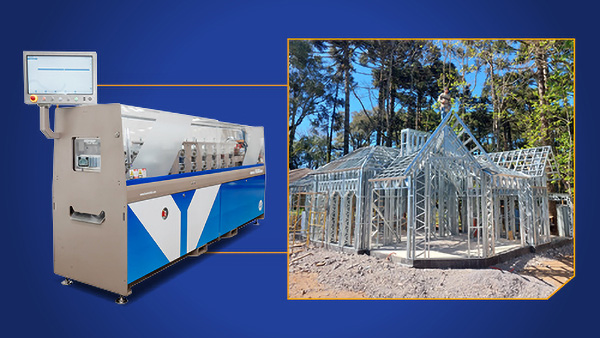
Are you considering manufacturing light gauge steel framing? Are you interested in taking the next step and learning how to make that happen? Or maybe you already own a Howick machine and you are looking to extend your capabilities?
This guide gives a brief summary of the different machines that we provide and what they can do for you, which will help inform your decisions.
From the workhorses FRAMA™ 3200 and 5600 - great for all standard framing needs - to specialised machines like the X-TENDA™ 3600 (everything the 3200 does, plus extendable frames for infill spaces) and the FRAMA™ 6800 (floor joist system) that are highly optimised to produce specific components, you will find we have a system available that meets most framing component manufacturing needs.
If you are thinking of something out of the ordinary, we also provide a range of customised options for our standard machines; we have even designed and manufactured new innovations to help solve specific challenges. Just talk to us about what you want to achieve.
Table of Contents
Detailed overview of our systems
Dedicated and multi-profile machines: Understanding the difference
Before exploring our machines in detail, it is important to know about the two different types of roll-forming machines: Dedicated and Multi-profile. Understanding the key differences will help you optimise your production and scale operations for your situation.
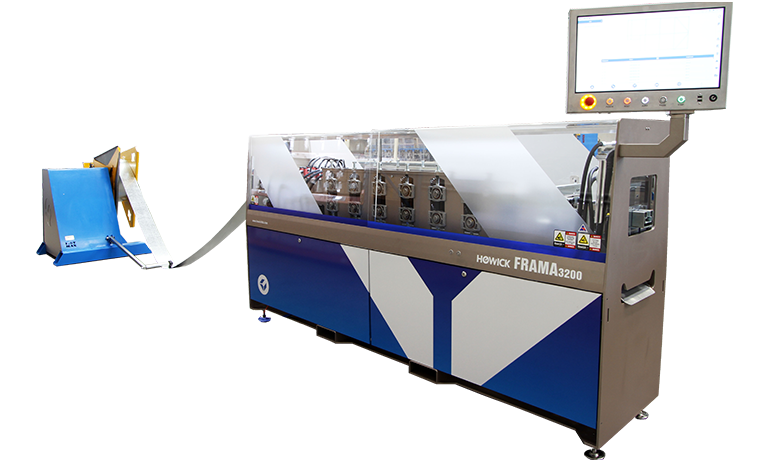
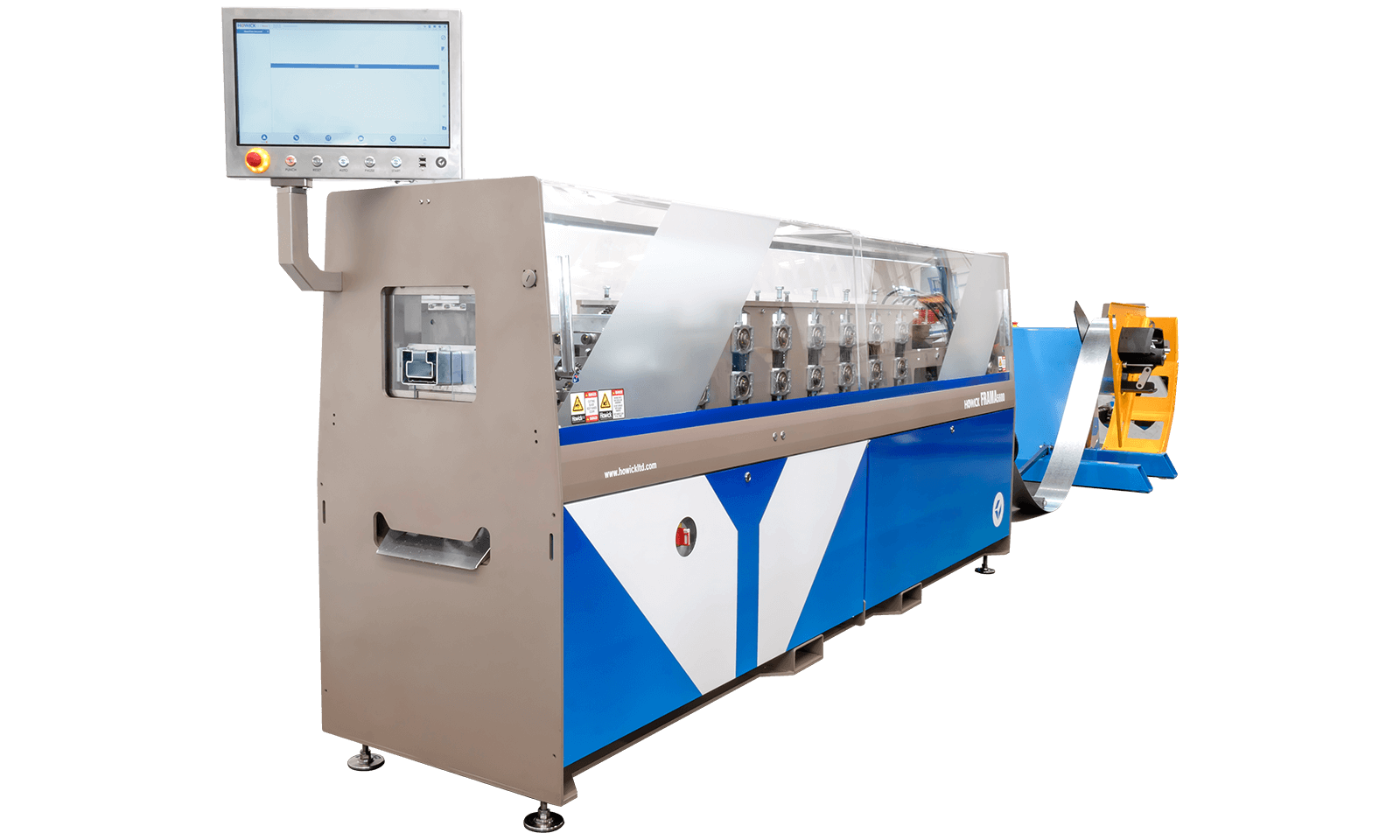
Dedicated machines
Dedicated machines are engineered to produce a specific profile. They are optimised for high-volume production, consistent quality and precision.
 |
 |
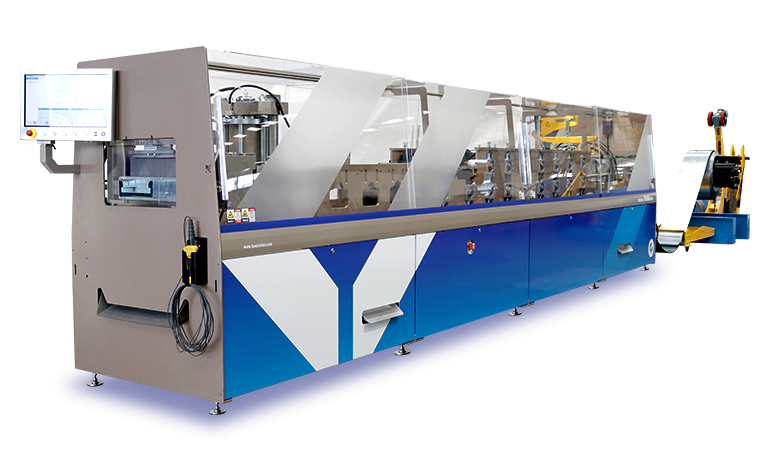
Multi-profile machines
Multi-profile machines are designed to produce multiple profile configurations, offering exceptional versatility and flexibility in your production capability offerings.
 |
 |
How do they compare side-by-side
| Feature | Dedicated Machines | Multi-profile Machines |
|---|---|---|
| Production Focus | Provides streamlined operations tailored to high volume output which leads to much higher production cycles. | Provides versatility in the ability to switch between profiles without the need for multiple machines. |
| Setup Time | Minimal setup time because of the fixed configuration. This provides for quick production turnaround. | Requires adjustments between different profiles, which leads to comparatively longer setup times and calibration. |
| Cost | Lower initial investment for single-profile production and ease of operation. | Higher upfront costs but cost-effective for producing multiple profiles without multiple machines. |
| Space Requirements | Occupies less space, so suitable for facilities with limited floor area and a single focus. | Machines have a larger footprint, but require less space than multiple machines. |
| Operational Complexity | Provides the ability for maximum throughput for volume requirements. | Requires operators to be more involved in changeover of multiple profile capability and calibration. |
If you have a clear idea of your production demands, budget, available space, and workforce capabilities, choosing the right machine can be straightforward. Start by assessing these factors and you will have a clearer idea of what type of machine might work best for you.
However, we are always available to discuss this decision with you to validate your production needs and output to meet your manufacturing requirements.
FRAMA™ 3200
The go-to Howick workhorse for standard framing requirements, the FRAMA™ 3200 is a dedicated frame and truss component manufacturing machine. Producing up to 900m/2952ft of framing per hour, it is designed for a gauge range of 0.75 to 1.15mm/22 to 18 gauge, making it ideal for many residential and commercial applications.
The machine features Howick's unique end-bearing stud detail for production of load bearing frames. The Howick swage and dimple design allows for smooth joints, so wall linings can sit flush to the framing. Internet connectivity allows for remote access for fault finding and maintenance.
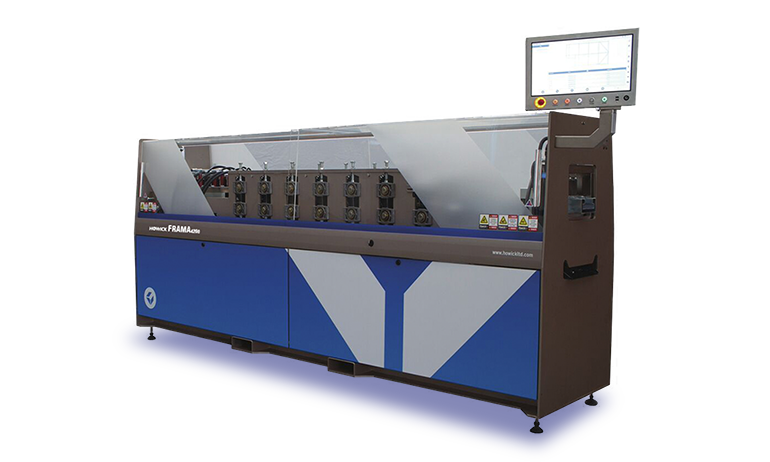
FRAMA™ 4200
With a bigger footprint than the FRAMA™ 3200, the FRAMA™ 4200 system is a dedicated truss machine using unique, innovative rivet jointing technology to produce a lightweight cost-effective truss solution.
Its rivet system offers superior strength compared to screws, plus the ability to put multiple components into a single joint. The single section truss profile is easy to assemble and transport, and fits standard truss brackets with the hollow rivet design allowing for bolted connection detail.
Its production rate is up to 700m/2297ft per hour with a gauge range of 0.75 to 0.95mm/22 to 20 gauge.
FRAMA™ 5600
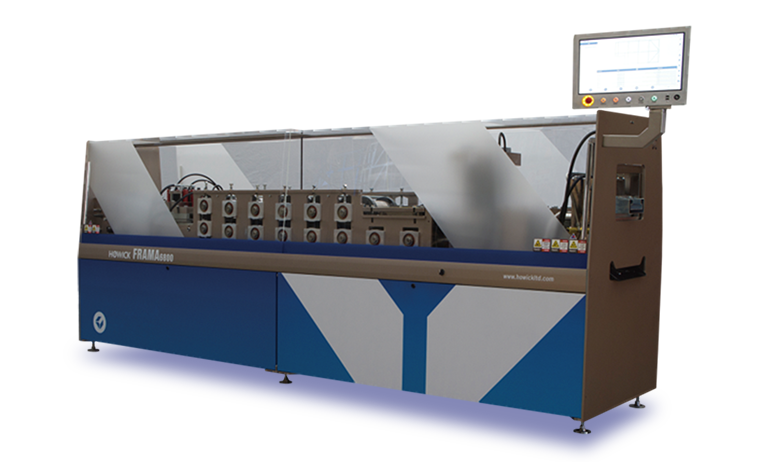
If you are looking for a system to manufacture heavier and wider sectioned frame and trusses with ease, this machine is ideal. The FRAMA™ 5600 forms material of up to 1.6mm/16 gauge in thickness.
Producing up to 800m/2620ft of framing per hour, it is designed for a gauge range of 0.95 to 1.55mm/20 to 16 gauge, making it ideal for many residential and commercial applications.
Like the 3200, the machine features Howick's unique end-bearing stud detail for load bearing frames. It also has the option of up to 2 additional custom tools for increased flexibility.
FRAMA™ 6800
Looking for a dedicated floor joist cassette manufacturing option? The FRAMA™ 6800 will give you increased production capacity. You will also benefit from improved installation efficiency over standard lattice flooring systems. This machine features our unique swaged service hole to make ducting and plumbing easy. The Howick swage and tab design allows for smooth joints, so the floor lining is able to sit flush to the joists. The floor cassettes can be built as modular units or easily assembled piece by piece in existing structures.
It offers a gauge range of 2.0 to 2.5mm (14 to 13 gauge) and produces up to 600m/968ft of floor joists per hour.
FRAMA™ 7600
For ultimate flexibility, the Howick FRAMA™ 7600 is a convertible profile frame and truss system. With our unique end-bearing stud detail for true load-bearing frames, plus our swage and dimple details for smooth intersections, this machine is convertible to up to 5 different framing sizes for a range of construction needs.
With the FRAMA™ 7600 in your armory, you are equipped to produce a single profile size and add additional tooling for alternative profile options as needed, without the cost and complication of a multiple profile roll former.
Our convertible design overcomes many of the traditional compromises that go with making multiple sections with adjustable tooling. It is compact too, which reduces wastage and improves accuracy. As well as the potential to add tooling for additional widths, if your production requirements increase you can simply add another base unit and use your existing tooling for multiple line runs. It offers a gauge range of 0.95 to 1.55 (20 to 16 gauge), and a production speed of up to 800m/2624ft per hour.
FRAMA™ 7800
The big brother to them all, the FRAMA™ 7800, like our FRAMA™ 6800, is a specialist floor joist fabrication system. This one comes with the additional benefit of convertible profile sizes.
It allows you to manufacture joists with sections from 150 to 300mm (6″ to 12″). It is also convertible for up to 5 floor joist profile widths offering a gauge range of 1.85 to 2.5mm (16 to 13 gauge). It outputs an impressive 750m or 2,460' per hour (maximum speed).
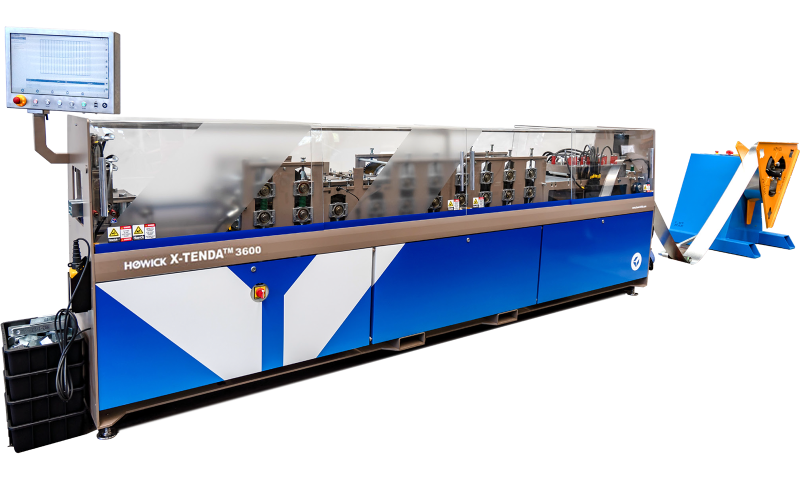
X-TENDA™ 3600
The X-TENDA™ 3600 saves 50% or more of the time it normally takes to frame interior spaces with traditional framing methods. It produces telescopic cold formed steel framing for retrofit or infill interior walls and ceilings. The components produced are pre-assembled, compressed for easy manoeuvre, then quickly expanded and adjusted onsite for a precise fit every time.
Using BIM technology, the X-TENDA™ 3600 produces components ready to assemble. All punching and fixing holes are placed with pinpoint accuracy, so they are self-locating, snapping together like Lego pieces to significantly improve efficiency. Strong, lightweight and retractable frames are easy to move around onsite, even in tight spaces. Once in place, panels can be extended in any direction to fit the most uneven spaces. Any doors or windows in the frames remain completely square, and there is no need for re-work, and zero wastage.
The X-TENDA™ 3600 not only manufactures telescopic panels, it is also truly versatile in that it does everything the FRAMA™ 3200 does - produces frame and truss components, and stud and track.
Dedicated coil-loading system
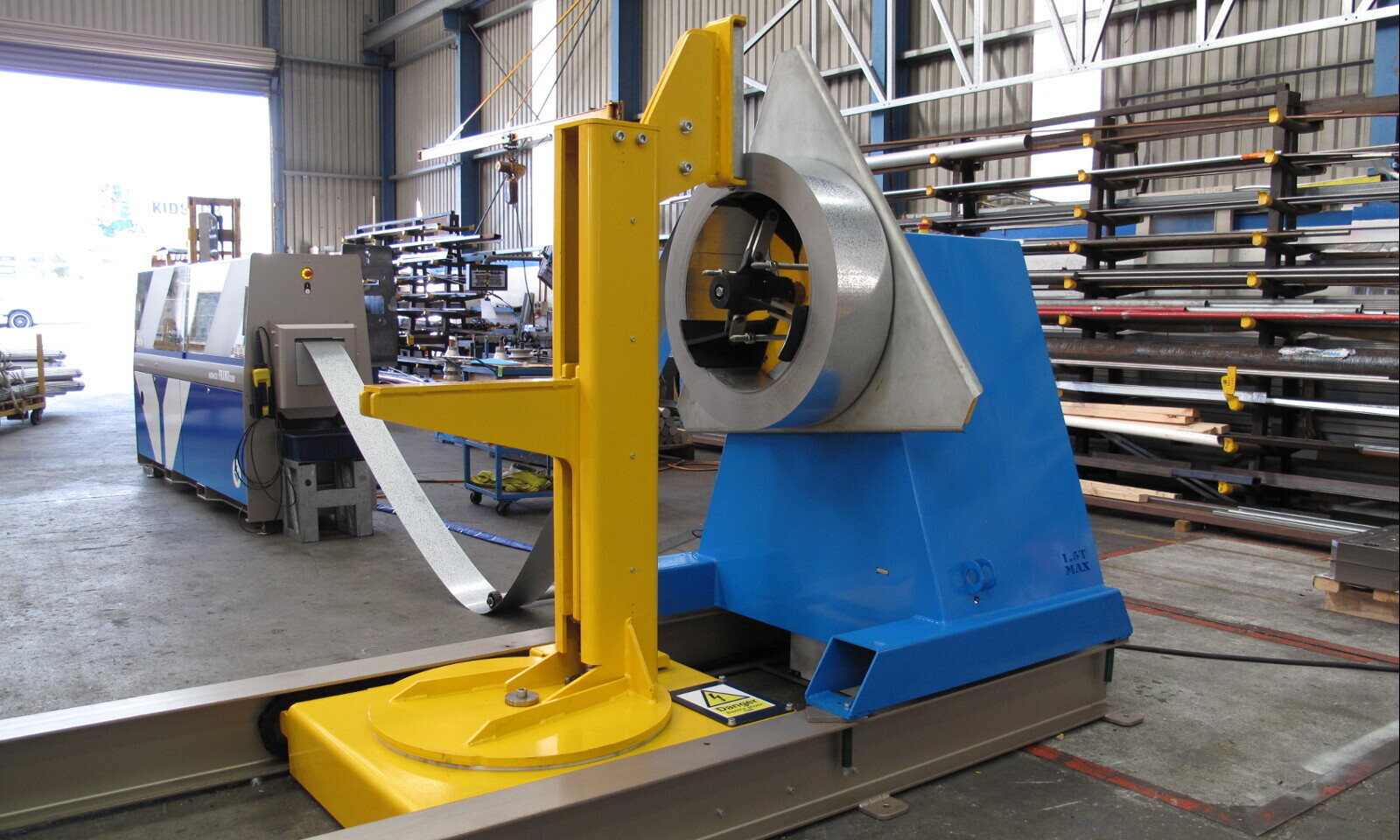
Downtime between coil changes is surprisingly one of the biggest inefficiencies for many framing plants. That is why our dedicated coil-loader has been designed to make changing coils quicker, easier and safer. Using this system, you change a coil in just 3 minutes instead of the 15 minutes it takes without - an increase in production efficiency of over 5% over a 7-hour shift.
Available in 1.5t and 3.0t decoiler configurations, this option can be added to any existing Howick machine.
Prefer a printable version?
Download a printable version of the Mini Guide - Choosing the right framing system here.
To find out more about setting up construction manufacturing with light gauge steel framing automation, read our full Machine Buyer Guide or get in touch with us today.
If this was useful, please share it with your network!


September 2026 #Roll-Forming Machine Buyer Guide