Machine Buyer Guide
⏱️ 20 min read
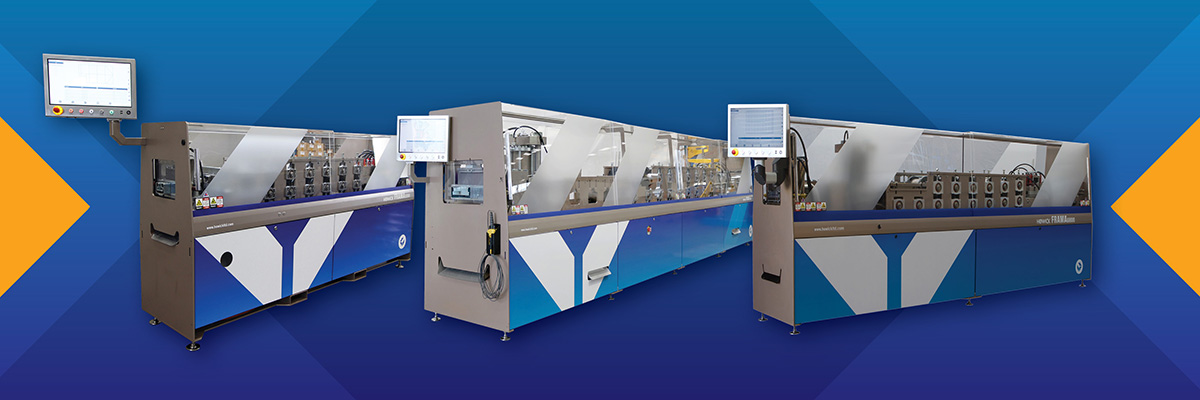
Considering building with steel or manufacturing light gauge steel framing?
This guide has been written to help you navigate the options available, so that you can make an informed choice about the most appropriate Howick system for your needs.
If you are considering switching from traditional construction to modern construction methods using light gauge steel and framing automation, this guide will highlight some of the commercial considerations. It provides an overview of the benefits of building with light gauge steel (LGS) and framing automation and its applications.
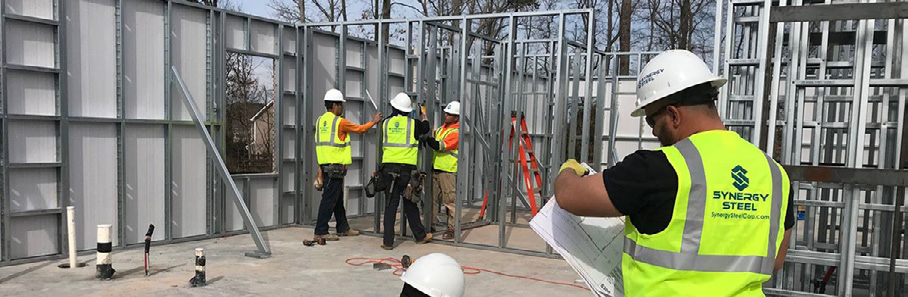
The guide gives a brief summary of the different machines that we provide and what they can do for you, which will help inform your decisions. It will also give you a view on what to expect over the life of ownership.
If you already build with LGS
If you are already building with steel and manufacturing steel with framing automation, we recommend you skip to the sections which relate to the benefits that Howick provides and the overview of our specific machines.
Ready to roll?
If at any point you wish to speak to us, please contact your local distributor, regional Howick office, or our Head of Global Sales, Deon Anderson, who is available at deon@howickltd.com. Alternatively, you can get in touch with us here.
No time? Here is the bite-sized version:
Buying a steel framing machine is a long term investment. This guide explains the key questions to ask, compares the different types of roll-forming systems, and helps you choose the right Howick machine for your business, production goals and future growth.
Table of Contents
- Building with steel: The opportunity for progressive construction businesses
- At stake is a forecast of $265 billion in profit – about 45% of incumbent value
- Moving to construction manufacturing with light steel framing automation – Basic considerations
- Here is a guideline to give you a sense of what is needed:
- Choosing the right system
- Dedicated and multi-profile machines: Understanding the difference
- Standard Howick framing systems. The quickfire guide to finding the right Howick machine
- And here is a detailed overview of our systems
- The Howick Advantage
- Why Howick?
- Case studies
- FAQ
- Get the Howick advantage
Building with steel: The opportunity for progressive construction businesses
The construction sector is worth an estimated $16 trillion US dollars each year. Yet, despite the massive shifts that have occurred in other sectors over the last 20 years, things have barely changed in the way we build. In fact, collectively the sector has realised just 1% in productivity improvements in that time.
A major study by global management consulting company McKinsey & Company highlighted a number of major trends that are now coming together to change the way the construction industry works. You can read more about this here. The study predicts that much is at stake.
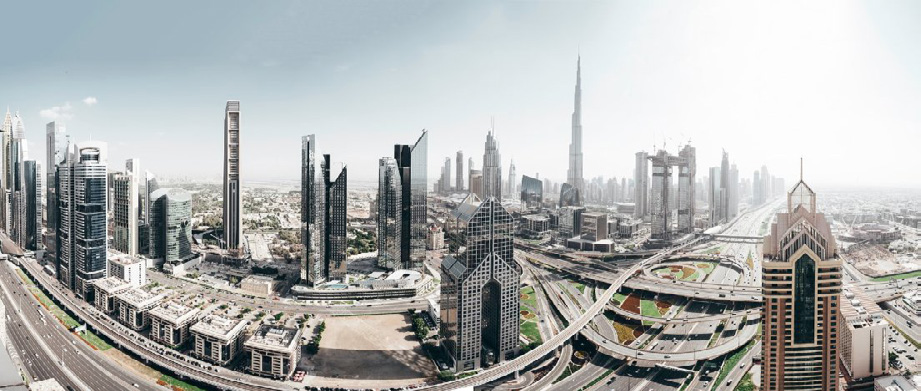
At stake is a forecast of $265 billion in profit – about 45% of incumbent value
The opportunity is there for those organisations that are capable of adopting more agile ways of working. Trends like digitalisation, specialisation, artificial intelligence, lean assembly and just-in-time delivery are just some of the empowering factors for smart construction businesses that are now being realised.
Modular and offsite construction using LGS are part of this drive. The U.S. modular construction market size was estimated at USD 10.53 billion in 2022 and is expected to grow at a compound annual growth rate (CAGR) of 7.8% from 2023 to 2030. The evidence we have seen in our own businesses – all be it a microcosm of the sector overall - suggests that this shift has continued to escalate in recent years.
With a backdrop of cost and time overruns being the norm in construction, change is now being fast-tracked by the need for greater efficiency and better cost management.
Considering making the shift to steel for framing, but not sure how it weighs up? Check out our LGS vs timber for framing comparison here.
Moving to construction manufacturing with light steel framing automation – Basic considerations
So, you have decided to move ahead into the world of construction manufacturing of LGS (light gauge steel) using framing automation in the form of roll-formed technology. Your approach is going to be defined based on a number of parameters:
1. What is your business focus and goals for LGS?
At the heart of your decision to switch to steel for framing will be the basis on which you do business (or are planning to do business) and how you see your role within the construction supply chain.
Whether you are into supplying panelised framing solutions to the industry, doing installation and supply, or running a wholly modular approach to construction, the speed of getting to a profitable return on your machine investment is dictated by machine time optimisation as well as the type of machine selected.
For those stepping into modern construction methods, having staff available with exposure to design-led construction and BIM technologies will fast-track this transition (more on this below).
2. What build applications are you focused on and how varied are your requirements?
LGS is ideal for frames, trusses, joists, flooring, commercial interior and infill framing. Howick systems can also produce load-bearing frames and truss profiles.
The level of variability there is in the types of framing or profiles you want to output will impact the type of machine you need, and the specifications of any adaptions you require to make it fit for purpose.
Our machines manufacture panels, trusses and floor joists for use in a range of applications.
- Residential and commercial building construction
- Steel framed systems for modular and prefabricated buildings
- Wall framing for low-rise and high-rise buildings
- Floors, beams, roofing, kitchen and bathroom pods
- Storage, recreational, transportable dwellings
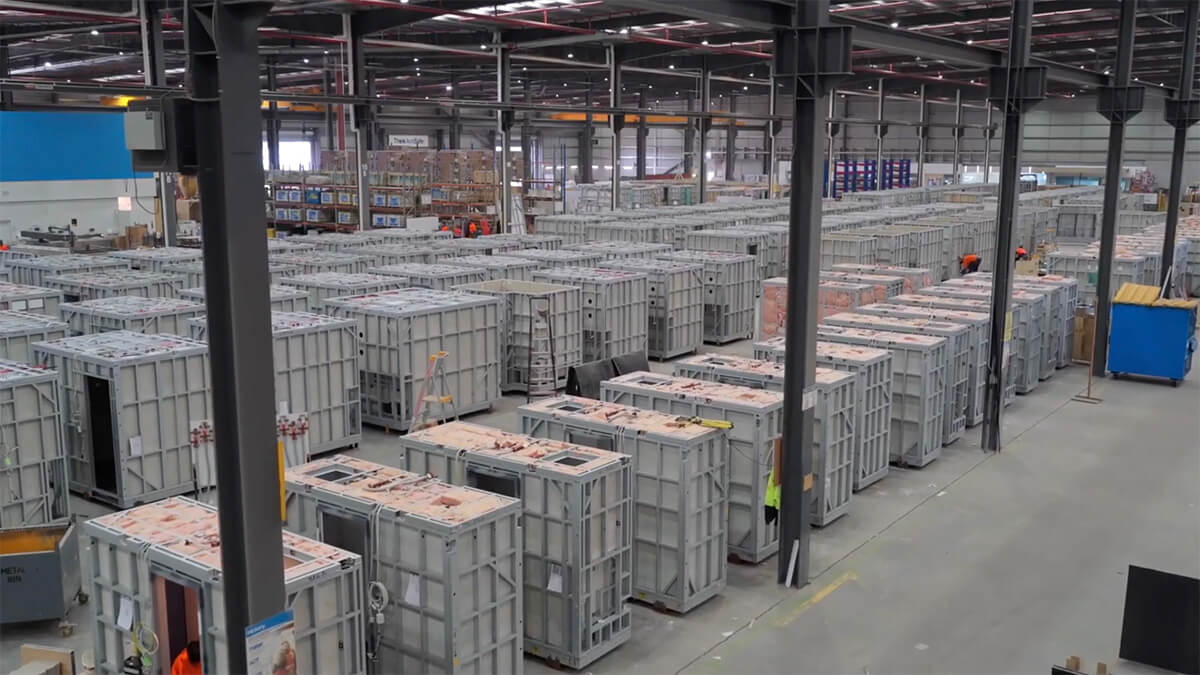 Bathroom pods at SYNC Industries
All Howick framing systems can manufacture C and U sections out of the same machine to be assembled into floors, walls and trusses. We also have specialist machines which output all normal framing components plus extendable panels for a perfect fit every time for interior frames and ceilings, as well as specialist machines for floors and trusses.
3. Transitioning to steel
Having decided to move ahead with light gauge steel for construction, you must also give consideration to how you intend to use it. In its simplest form, LGS frames can be produced in standard lengths, cut and connected onsite (like timber). Next on the continuum is producing pre-cut and punched components, using framing automation, to be assembled onsite. The most efficient of all three options is a fully panelised approach using framing automation, where whole panels are fully assembled on the factory floor to be delivered ready to install.
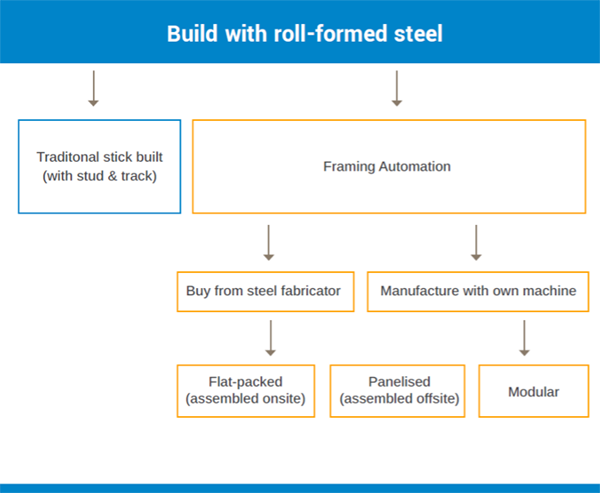
In our experience, most building companies with whom we work find it relatively easy to make the transition to steel from standard timber or brick construction.
If you would like to talk to other construction businesses who have made the transition, Howick may well be able to facilitate a conversation – just reach out to us in the first instance.
4. Design-led construction
Our most successful clients and partners are advocates for design-led construction. They work on the basis they build everything twice – first in a 3D modelled environment, then live onsite. This has major benefits as re-work requirements are kept to a bare minimum, optimising build times and profitability.
For some construction businesses, this requires a culture change from an expectation that inaccuracies will be resolved onsite – effectively like firefighting as the project progresses – to a considered build approach more akin to a fire prevention mentality.
To ensure a successful transition, consider any investments required in design expertise and experience as well as the capital costs of machinery.
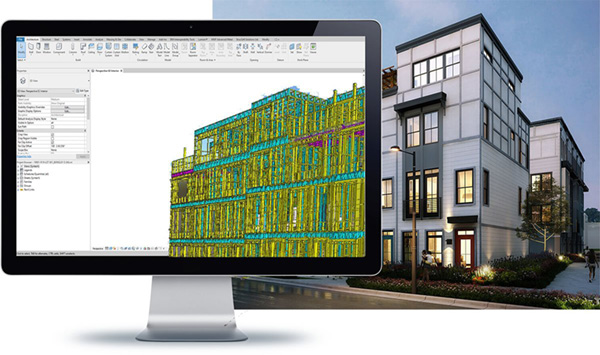
Image courtesy Synergy Steel
5. Working with BIM and 3D construction modelling software
Continuing the design-led theme, previous experience using 3D modelling construction design software is an advantage.
There is a plethora of Building Information Modelling (BIM) software available to help optimise design efficiency. It is worth noting that in the UK and some US states and federal agencies, government work requires construction businesses to be using BIM software as a matter of course.
6. Space requirements
How much space do you have available for manufacturing LGS framing?
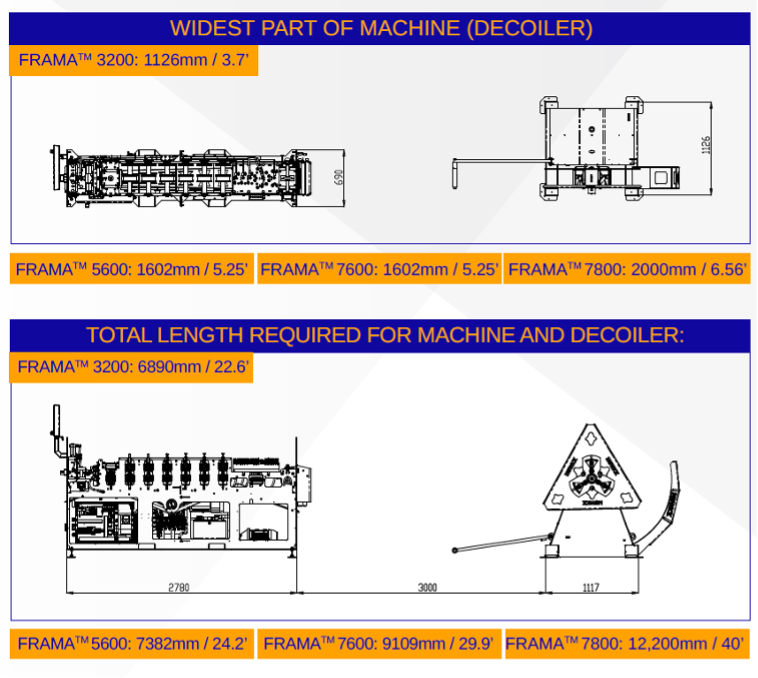
Howick machines are designed to minimise the factory footprint required as well as optimise for output. Even our convertible multi-purpose machine, the Howick FRAMA™ 7600, and convertible specialist floor joist system, FRAMA™ 7800, are more compact and occupy a smaller footprint than many comparable systems out there.
Here is a guideline to give you a sense of what is needed:
Machine space
Our smallest machine has a footprint of 2.8m x 0.62m x 1.4m (9.2' x 2.1' x 4.6') and weighs in at 1,800kg (4,400lb), going up to 7.4m x 1.2m x 1.8m (24′ 3″ x 3′ 11″ x 5′ 10″) and 8,400kg (18,519lb) for our largest, Howick FRAMA™ 7800.
Decoiler
The 1.5t Decoiler, suited for the FRAMA™ 3200, 4200 and X-TENDA™ 3600, has a footprint of L x W x H: 1.05m x 1.2m x 1.68m (3.4' x 6.6' x 5.5').
The 3.0t Decoiler, suited for the FRAMA™ 5600, 6800, 7600, and 7800, has a footprint of L x W x H: 1.35m x 1.6m x 1.45m (4.4' x 5.2' x 4.9').
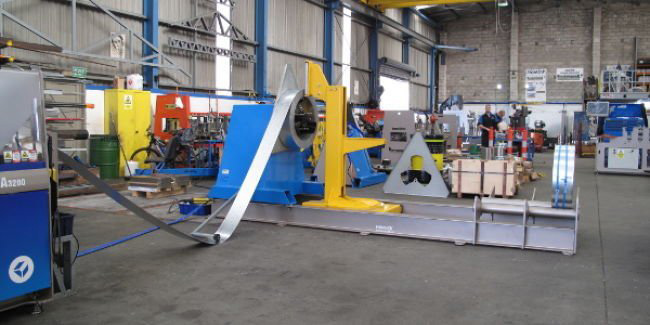
Allow 3–4m (9.8'–13.1') of feeding space between the decoiler and the machine (depending on the size of your machine).
Out-feed space and out-feed table
An out-feed table is required to collect the profiles as they roll out, and should be positioned immediately adjacent to the out-feed of the machine. The width of the table must be sufficient to take the widest profile.
Assembly tables and storage areas
The assembly tables and storage areas you require will be dependent upon your situation - what you are producing and how much you intend to store at any time.
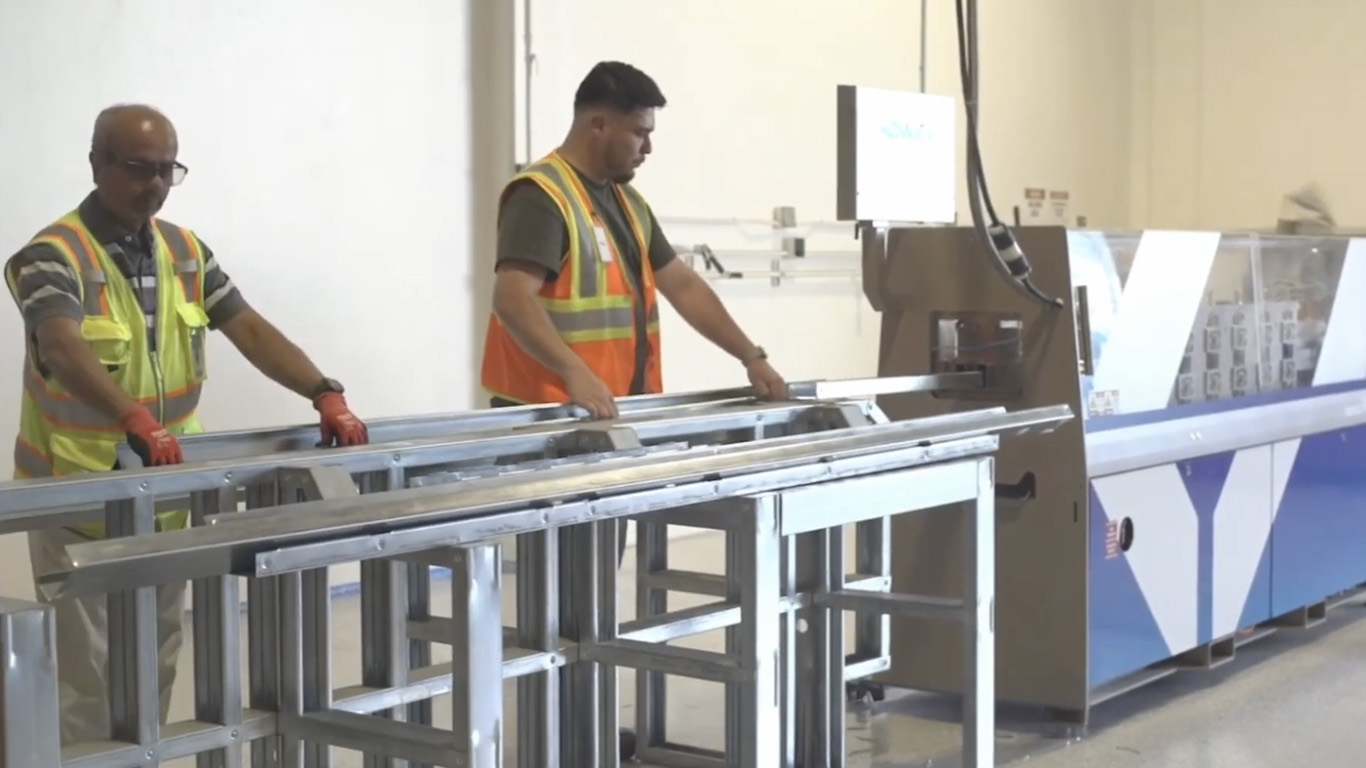 Image courtesy of Capsule.
Storage and distribution
Ensure you have space to store completed framing components and frames ready for distribution. This should be conveniently located for fast and safe access to a loading bay, with access for trucks and trailers being used for distribution to site.
7. Framing software
We can supply the machine only or as a package with our preferred software partner. All Howick machines have a built-in Windows based control panel which accepts a basic CSV file from a range of design software systems.
This gives complete freedom of choice across a range of software depending on your preferences, design requirements and budget.
You can, of course, use our simple panel software included free in the machine supply for very elementary panel designs.
Another advantage of the open language control and multiple software options is that you are not committed to any contract with a single software package. You can upgrade as the needs of your company evolve.
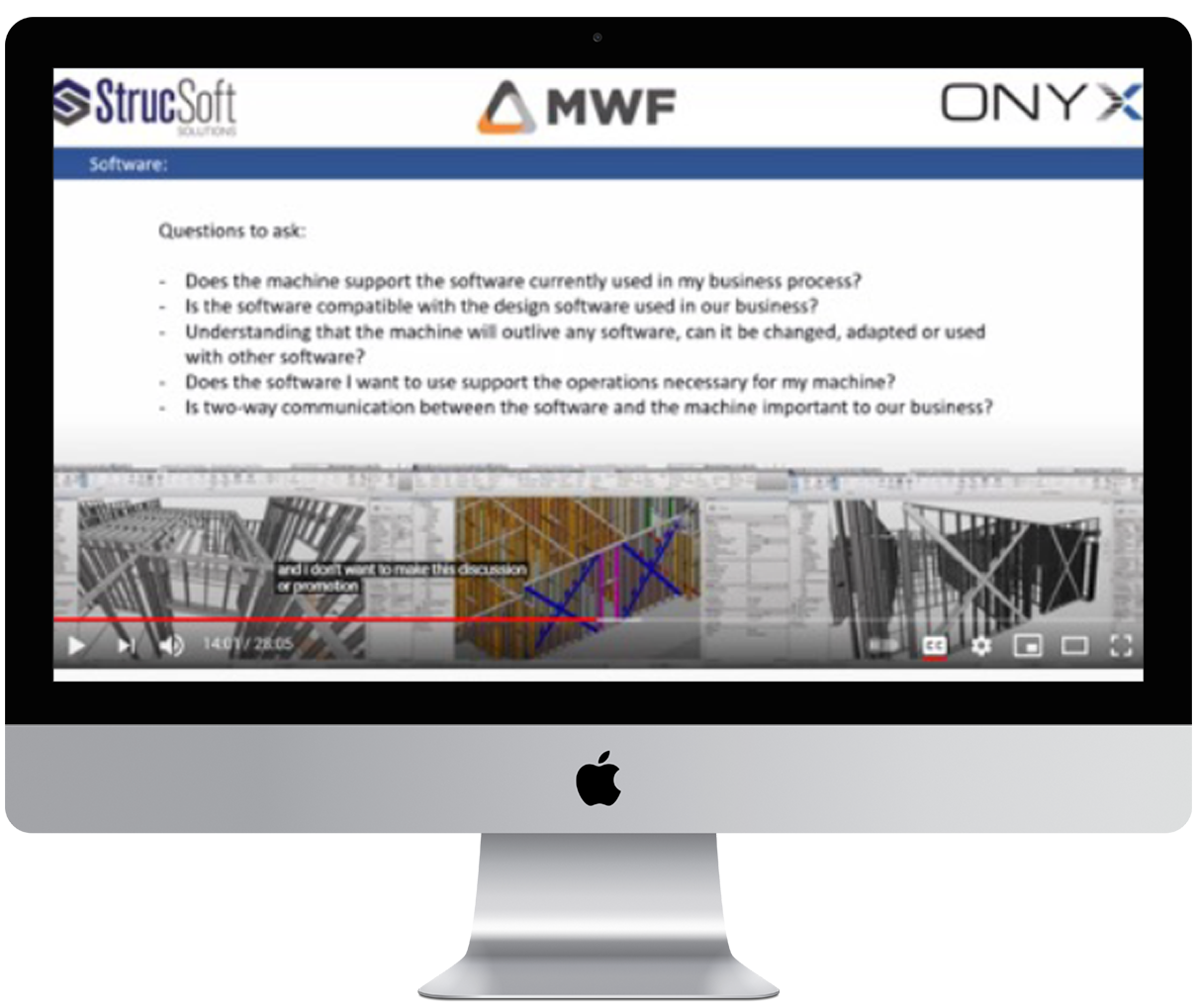
Howick does provide training on our own software and will help ensure you have the knowledge needed to ensure systems are up and running and producing an ROI as quickly as possible.
For more on this, we recommend checking out Strucsoft's webinar on working with roll-forming technology, which provides a ready-reckoner for the questions you need to be considering in your decision making.
8. Delivery timeframes
All our machines are manufactured in New Zealand with locally sourced components. As well as giving us greater oversight of quality control and logistics within our supply chain, this minimises machine construction timeframes. Talk to us early in your decision-making to work through realistic delivery schedules. The earlier we are involved, the easier it will be to prioritise your needs.
9. Machine uptime – ensuring reliable ongoing performance
Our machines are of rugged and reliable construction. This has been proven in the market, with some of our customers in full production with Howick roll-forming machines for over 20 years.
We supply you with the most common consumables with the machine purchase, but we recommend you keep ahead of the game by forward ordering commonly used spare parts to hold in stock, to avoid production delays.
Howick machines are CE certified and have Category 3, E-stop safety circuit, coil unravel guards as well as tool return proximity sensors to ensure the safety of your workers and to prevent damage to the machine.
Designed with reliability and longevity in mind, our machinery makes servicing as easy as possible too. Some of the consumable spare parts you may require are internationally available so you can source them directly from us or via a local supplier.
10. Ongoing running costs
With Howick systems you have full ownership. There are no hidden royalties, toll fees or software license fees to pay. Our Panel Software is ideal for simple panels and trusses and is included in the machine supply price. Because we have no hidden on-going fees, you will find you save considerable amounts over the life of your machine, compared with some other competing products.
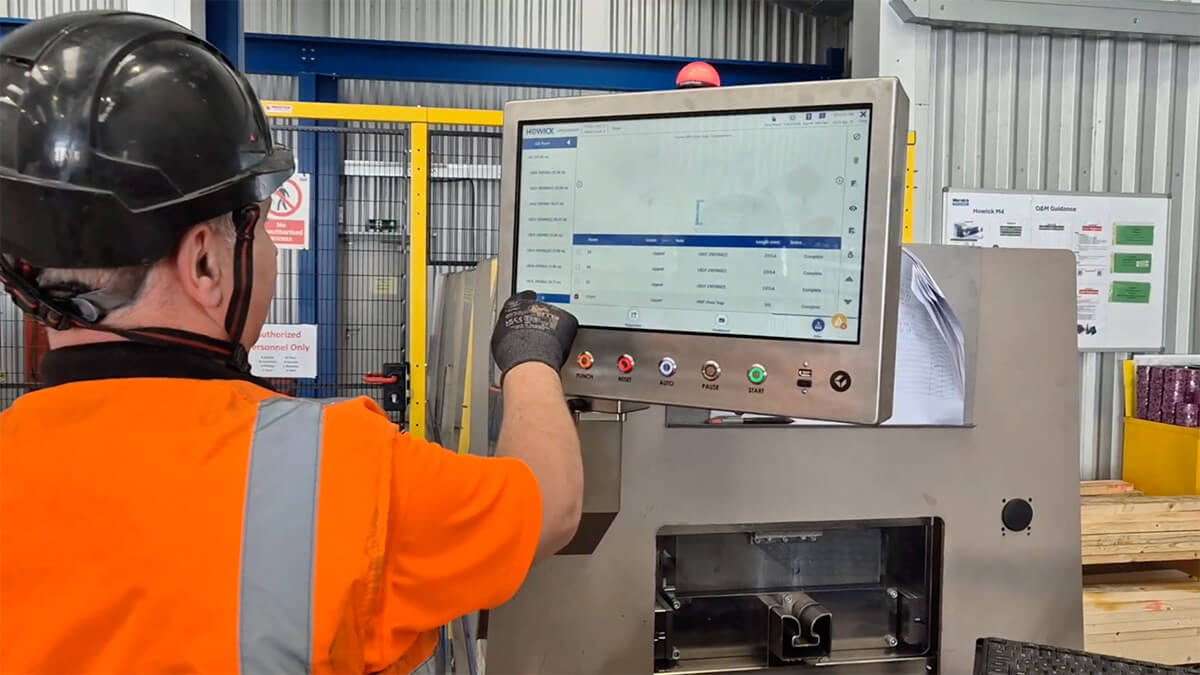 Wernick Buildings
11. Protecting your investment – Support, servicing and maintenance
As all of our machines are made in-house, our technicians can solve issues quickly. When you do require support, you are talking directly to the people who design and build the machines, not an intermediary party. This expedites the best solutions to ensure you are back up and running as efficiently as possible.
Howick operates from our head office in New Zealand as well as our offices in the UK, USA, Europe and Australia. With knowledgeable distributors worldwide in a number of other countries, we can offer round the clock support at no extra cost.
12. Commissioning your new Howick system
Once your machine arrives, the Howick team will be available to guide you step-by-step through the commissioning process. In most scenarios, it will take no more than three days, including the training of operating staff, to have your system ready to roll from the time it is in place on your site, provided you have completed the pre-installation check and power is connected.
13. Training to optimise your Howick system
Full training is provided in the use of your machine when it is first commissioned. Again, we are on-hand to support you should you have further questions or technical requirements beyond this point.
14. Getting to a return on your investment fast
The scale of your current operation will play a major part in your decision making around manufacturing in-house with your own machine versus outsourcing or partnering for manufacturing.
If you are building a relatively small number of properties each year, we recommend you outsource the manufacturing of your LGS framing to a reputable supplier in the early days as you transition to building with steel.
As a rule of thumb, a full pipeline of ongoing projects with multiple properties will see you reach a positive return on investment on your own machine within 12 to 18 months.
The higher your levels of machine utilisation, the faster your returns. If you are not already doing so, it will pay dividends to offer offsite LGS framing services to other construction businesses.
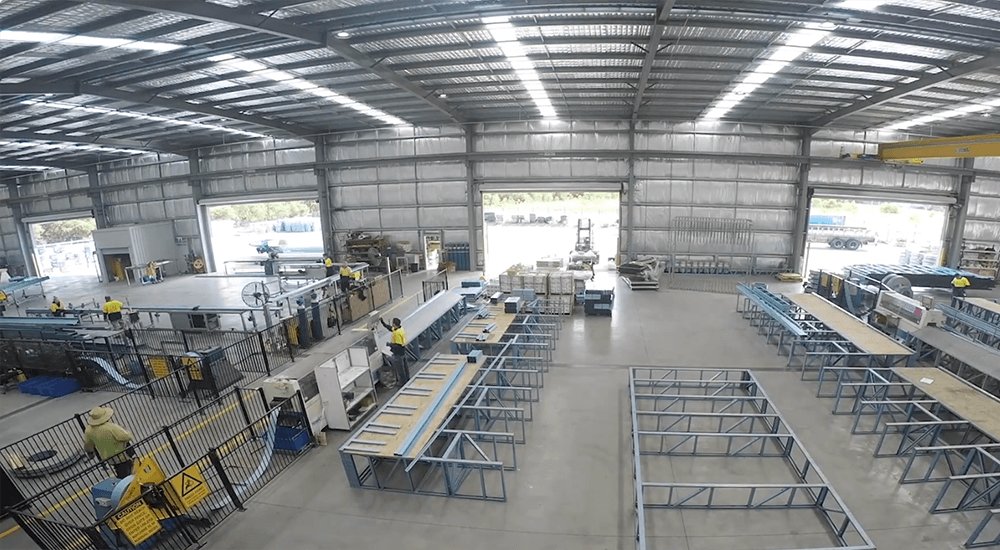 Queensland Steel House Frames
Choosing the right system
From the workhorses FRAMA™ 3200 and 5600 – great for all standard framing needs – to specialised machines like the X-TENDA™ 3600 (everything the 3200 does, plus extendable frames for infill spaces) and the FRAMA™ 6800 (floor joist system) that are highly optimised to produce specific components, you will find we have a system available that meets most framing component manufacturing needs.
If you are thinking of something out of the ordinary, we also provide a range of customised options for our standard machines; we have even designed and manufactured new innovations to help solve specific challenges. Just talk to us about what you want to achieve.
Dedicated and multi-profile machines: Understanding the difference
Before exploring our machines in detail, it is important to know about the two different types of roll-forming machines: Dedicated and Multi-profile. Understanding the key differences will help you optimise your production and scale operations for your situation.
Dedicated machines
Dedicated machines are engineered to produce a specific profile. They are optimised for high-volume production, consistent quality and precision.
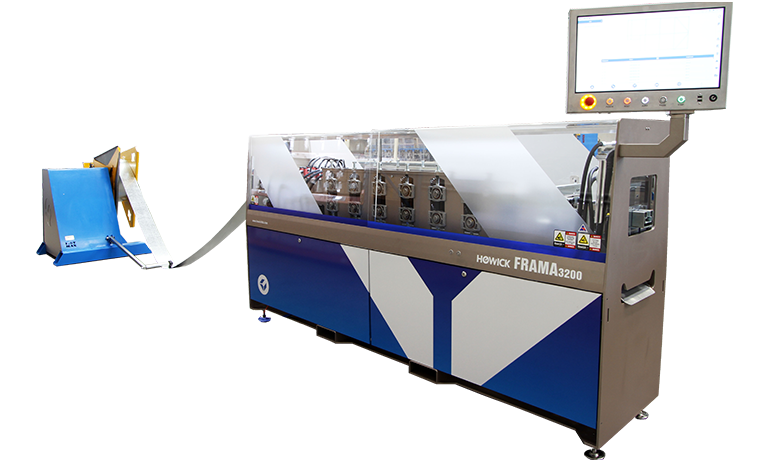
- Howick FRAMA™ 3200 Frame, Truss & Panel Machine
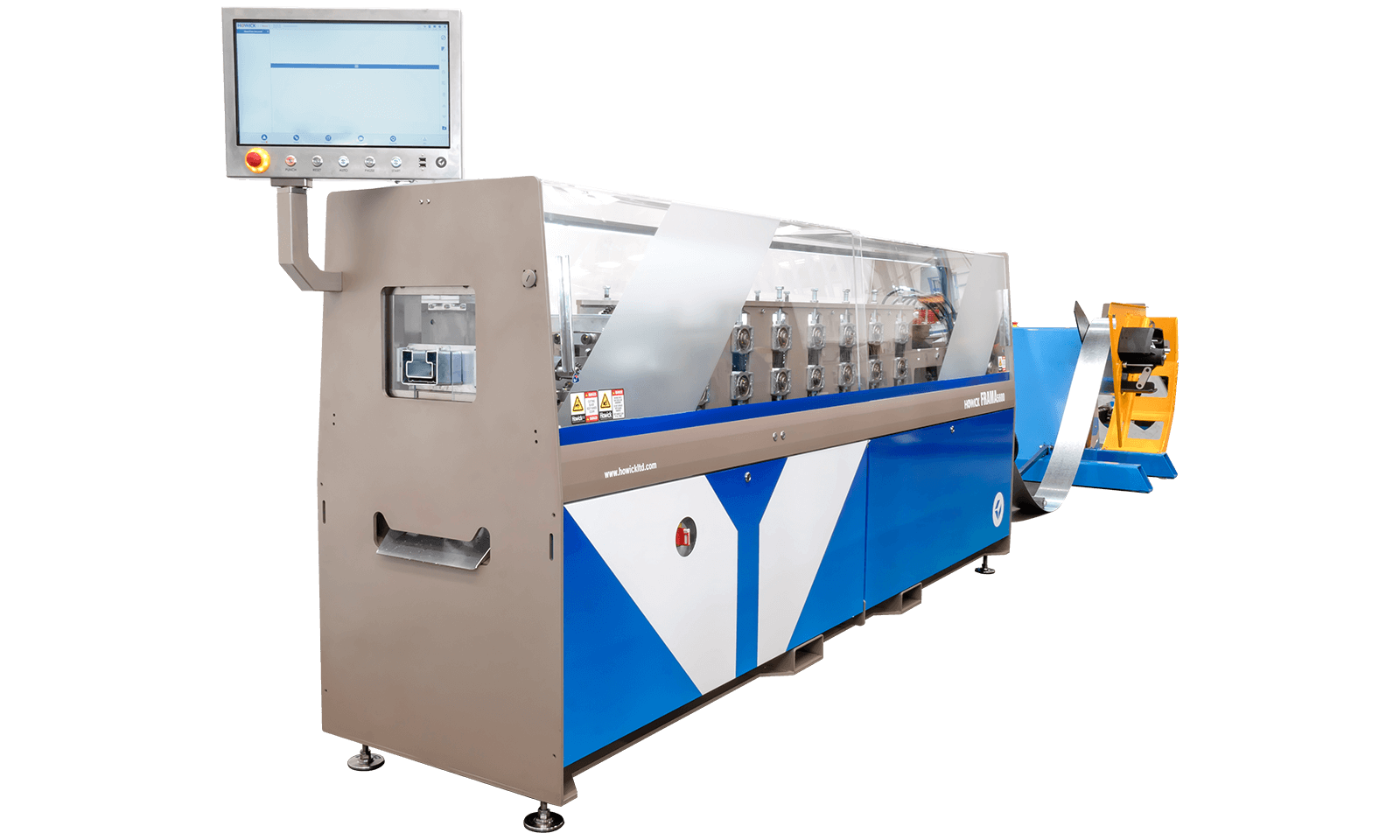
- Howick FRAMA™ 5600 Frame, Truss & Panel Machine
 |
 |
Multi-profile machines
Multi-profile machines are designed to produce multiple profile configurations, offering exceptional versatility and flexibility in your production capability offerings.
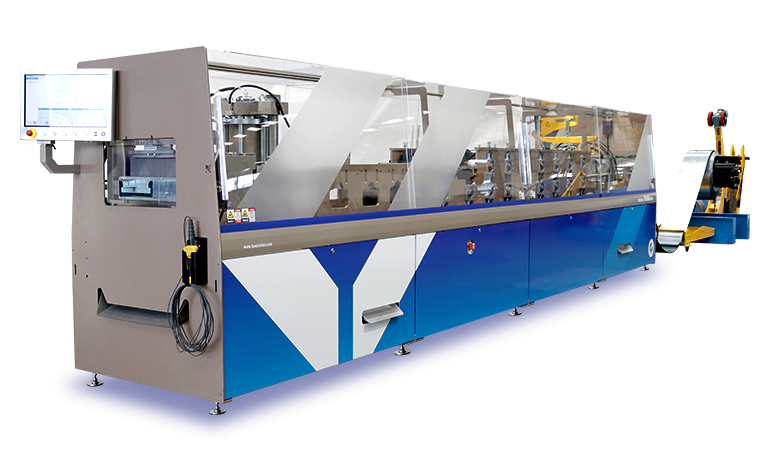
- Howick FRAMA™ 7600 Multi-purpose System
- Howick FRAMA™ 7800 Multi-Profile Floor Joist System
 |
 |
How do they compare side-by-side
| Feature | Dedicated Machines | Multi-profile Machines |
|---|---|---|
| Production Focus | Provides streamlined operations tailored to high volume output which leads to much higher production cycles. | Provides versatility in the ability to switch between profiles without the need for multiple machines. |
| Setup Time | Minimal setup time because of the fixed configuration. This provides for quick production turnaround. | Requires adjustments between different profiles, which leads to comparatively longer setup times and calibration. |
| Cost | Lower initial investment for single-profile production and ease of operation. | Higher upfront costs but cost-effective for producing multiple profiles without multiple machines. |
| Space Requirements | Occupies less space, so suitable for facilities with limited floor area and a single focus. | Machines have a larger footprint, but require less space than multiple machines. |
| Operational Complexity | Provides the ability for maximum throughput for volume requirements. | Requires operators to be more involved in changeover of multiple profile capability and calibration. |
If you have a clear idea of your production demands, budget, available space, and workforce capabilities, choosing the right machine can be straightforward. Start by assessing these factors and you will have a clearer idea of what type of machine might work best for you.
However, we are always available to discuss this decision with you to validate your production needs and output to meet your manufacturing requirements.
Standard Howick framing systems. The quickfire guide to finding the right Howick machine

Want a great compact workhorse system that will produce most standard framing requirements for housing and low-rise?
You do not need to look any further than the FRAMA™ 3200.
You want a workhorse capable of making heavier load-bearing framing for large build projects, low-rise and commercial with greater capacity and increased flexibility?
The FRAMA™ 5600 is the right horse to jump on.
You want a dedicated truss system that is highly efficient and produces in volume?
Step up to the FRAMA™ 4200 and try that for size. It is the system you can truss (see what we did there?).
You want a dedicated flooring system that manufactures more efficiently than assembling lattice flooring?
The FRAMA™ 6800 pops out floor joist cassettes with gusto. Plus, you will find them much more efficient to install.
You want a dedicated flooring system that can handle heavier gauge than the FRAMA™ 6800?
The FRAMA™ 7800 is the big brother to the FRAMA™ 6800. It offers everything the 6800 does, and it can handle thickness of up to 2.5mm / 13 gauge.
You want a convertible frame and truss system with high output capacity that can be adjusted to handle 5 different profiles in the one machine?
Welcome to the ultimate flexibility of the FRAMA™ 7600. It offers 5 different profiles and can be configured for production of framing, trusses and panels.
You want to produce standard framing, plus extendable framing for fast framing of interior spaces?
The X-TENDA™ 3600, the latest in infill framing technology, makes telescopic framing that is extendable in any direction to fill any space fast. It is also truly versatile in that it does everything the FRAMA™ 3200 does - produces frame and truss components, and stud and track.
You want to improve the efficiency of your framing plant by 5%?
Just add the option of a Howick dedicated coil-loading system. Over a 7-hour shift, you will improve efficiency by 5%.
And here is a detailed overview of our systems
FRAMA™ 3200
The go-to Howick workhorse for standard framing requirements, the 3200 is a dedicated frame and truss component manufacturing machine. Producing up to 900m/2952ft of framing per hour, it is designed for a gauge range of 0.75 to 1.15mm/22 to 18 gauge, making it ideal for many residential and commercial applications.
The machine features Howick's unique end-bearing stud detail for production of load bearing frames. The Howick swage and dimple design allows for smooth joints, so wall linings can sit flush to the framing. Internet connectivity allows for remote access for fault finding and maintenance.
FRAMA™ 4200
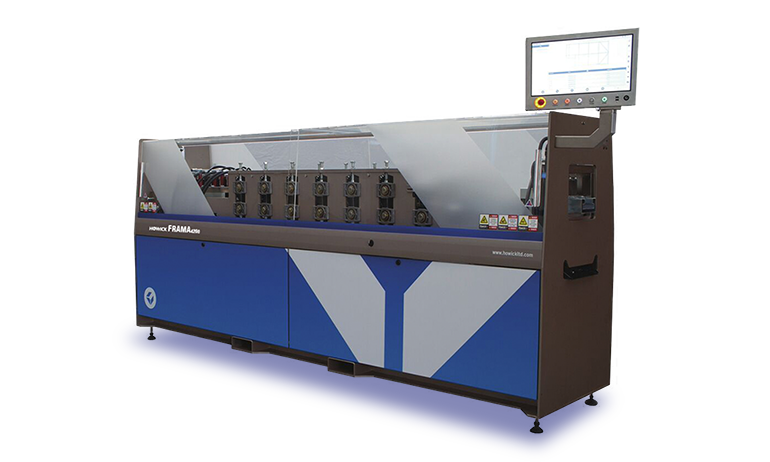
With a bigger footprint than the FRAMA™ 3200, this system is a dedicated truss machine using unique, innovative rivet jointing technology to produce a lightweight cost-effective truss solution.
Its rivet system offers superior strength compared to screws, plus the ability to put multiple components into a single joint. The single section truss profile is easy to assemble and transport, and fits standard truss brackets with the hollow rivet design allowing for bolted connection detail.
Its production rate is up to 700m/2297ft per hour with a gauge range of 0.75 to 0.95mm/22 to 20 gauge.
FRAMA™ 5600
If you are looking for a system to manufacture heavier and wider sectioned frame and trusses with ease, this machine is ideal. It forms material of up to 1.6mm/16 gauge in thickness.
Producing up to 800m/2620ft of framing per hour, it is designed for a gauge range of 0.95 to 1.55mm/20 to 16 gauge, making it ideal for many residential and commercial applications.
Like the 3200, the machine features Howick's unique end-bearing stud detail for load bearing frames. It also has the option of up to 2 additional custom tools for increased flexibility.
FRAMA™ 6800
Looking for a dedicated floor joist cassette manufacturing option? The FRAMA™ 6800 will give you increased production capacity. You will also benefit from improved installation efficiency over standard lattice flooring systems. This machine features our unique swaged service hole to make ducting and plumbing easy. The Howick swage and tab design allows for smooth joints, so the floor lining is able to sit flush to the joists. The floor cassettes can be built as modular units or easily assembled piece by piece in existing structures.
It offers a gauge range of 2.0 to 2.5mm (14 to 13 gauge) and produces up to 600m/968ft of floor joists per hour.
FRAMA™ 7600
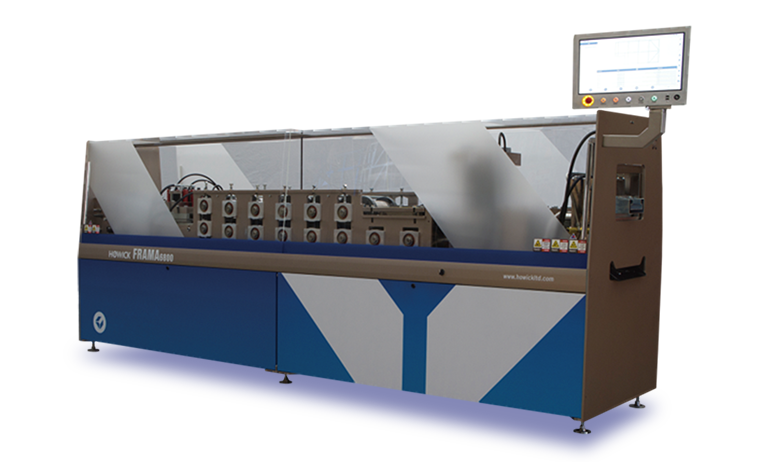
For ultimate flexibility, the Howick FRAMA™ 7600 is a convertible profile frame and truss system. With our unique end-bearing stud detail for true load-bearing frames, plus our swage and dimple details for smooth intersections, this machine is convertible to up to 5 different framing sizes for a range of construction needs.
With the FRAMA™ 7600 in your armory, you are equipped to produce a single profile size and add additional tooling for alternative profile options as needed, without the cost and complication of a multiple profile roll former.
Our convertible design overcomes many of the traditional compromises that go with making multiple sections with adjustable tooling. It is compact too, which reduces wastage and improves accuracy. As well as the potential to add tooling for additional widths, if your production requirements increase you can simply add another base unit and use your existing tooling for multiple line runs. It offers a gauge range of 0.95 to 1.55 (20 to 16 gauge), and a production speed of up to 800m/2624ft per hour.
FRAMA™ 7800
The big brother to them all, the FRAMA™ 7800, like our FRAMA™ 6800, is a specialist floor joist fabrication system. This one comes with the additional benefit of convertible profile sizes.
It allows you to manufacture joists with sections from 150 to 300mm (6″ to 12″). It is also convertible for up to 5 floor joist profile widths offering a gauge range of 1.85 to 2.5mm (16 to 13 gauge). It outputs an impressive 750m or 2,460' per hour (maximum speed).
X-TENDA™ 3600
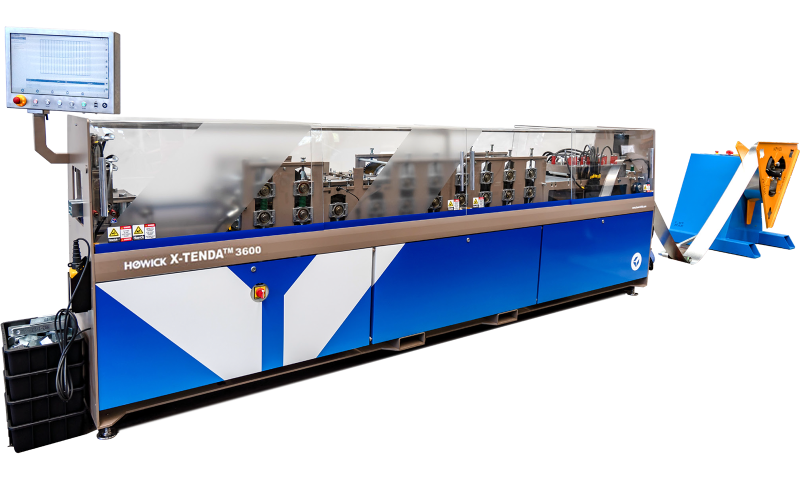
The X-TENDA™ 3600 saves 50% or more of the time it normally takes to frame interior spaces with traditional framing methods. It produces telescopic cold formed steel framing for retrofit or infill interior walls and ceilings. The components produced are pre-assembled, compressed for easy manoeuvre, then quickly expanded and adjusted onsite for a precise fit every time.
Using BIM technology, the X-TENDA™ 3600 produces components ready to assemble. All punching and fixing holes are placed with pinpoint accuracy, so they are self-locating, snapping together like Lego pieces to significantly improve efficiency. Strong, lightweight and retractable frames are easy to move around onsite, even in tight spaces. Once in place, panels can be extended in any direction to fit the most uneven spaces. Any doors or windows in the frames remain completely square, and there is no need for re-work, and zero wastage.
The X-TENDA™ 3600 not only manufactures telescopic panels, it is also truly versatile in that it does everything the FRAMA™ 3200 does - produces frame and truss components, and stud and track.
Custom built framing machines
From time to time, we get highly specific requests that go beyond the functionality of our existing 'standard' roll-forming systems. Indeed, we have a long history of producing custom one-off machines.
If you have an application in mind, and you are not quite sure which system is right for you, or whether you may need a bespoke machine built from the ground up, talk to us. Our designers and engineers love finding solutions for new, innovative and complex offsite construction challenges. After an initial discussion, even when customers think they need a bespoke solution, we often find one of our existing systems is fit for purpose, will do a great job for them, and achieve their goals at a fraction of the cost of a bespoke engineering solution. Either way, we recommend starting with a conversation.
Dedicated coil-loading system
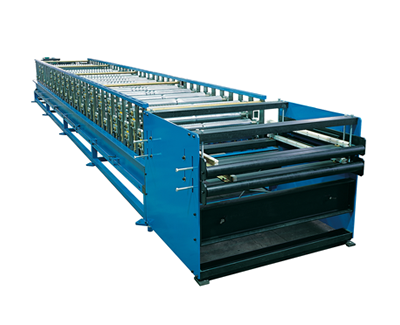
Downtime between coil changes is surprisingly one of the biggest inefficiencies for many framing plants. That is why our dedicated coil-loader has been designed to make changing coils quicker, easier and safer. Using this system, you change a coil in just 3 minutes instead of the 15 minutes it takes without - an increase in production efficiency of over 5% over a 7-hour shift.
Available in 1.5t and 3.0t decoiler configurations, this option can be added to any existing Howick machine.
Compare Product Specifications
The Howick Advantage
Howick is a pioneer in the technology of precision light steel roll-forming machines. For nearly 50 years, our commitment to innovation in cold formed steel (also known as light gauge steel), precision manufacturing, uncompromising quality and exemplary customer service has defined the Howick way. This commitment underpins the competitive advantage enjoyed by our customers.
We are trusted partners and suppliers to developers, builders and offsite construction companies in over 80 countries. Our machines offer high-precision manufacturing direct from coil steel for all your cold formed steel framing, flooring and roofing needs.
Using CAD technology, our machines produce cold formed steel components ready to assemble for walls, floors and trusses for a total steel building solution. Custom-made to your specifications, you will enjoy proven reliability, rapid build speeds, improved accuracy and dramatically reduced wastage.
So, whether you are looking to create framing systems for residential new builds, low-rise commercial or even bathroom pods, our machines make framing up fast and incredibly efficient.
To make the switch to steel, or simply lift your steel framing game, start with a conversation with us today.
Why Howick?
There is a major problem globally with the cost of housing, so the construction industry is striving for better, smarter ways of doing things. At Howick, we see ourselves as part of the solution. If we get it right, we will help create a better place for everyone.
1. Proudly New Zealand made
Unique in our sector, Howick steel roll-forming systems are 100% manufactured at our plant in Auckland, with top quality New Zealand made componentry either made at the Howick factory or sourced locally.

2. Free rolling with Howick
Unlike competing products, with a Howick system there are no meterage rates. This means you can run as much steel as required once you own the machine, and you pay zero in the way of toll rolling fees. This type of fee can make a big difference to the whole-life operating costs and the returns you make on your investment, so worth looking out for!
3. And no Howick software fees!
Specifically designed for frame manufacturers, our machines will receive data from any partnered CAD framing package. Because they come with an open language control system you pay no licence fees to Howick. You are free to pair your machine with your software of choice. If you already work with an existing CAD system, it means an easier transition and keeps things simple for you and your team. If you are not working with an existing system, that is fine – talk to us and we will help you select the best option for your needs.
4. Unique features include true load-bearing joints
Howick customers benefit from precision accuracy, so things like re-work and wastage are kept to the absolute minimum. As an example, all punching and fixing holes are placed through pinpoint accurate computer control. As well as ensuring that frames and trusses are manufactured with extreme precision, this also means they can be self-locating and jigging, saving time and improving efficiency.
What is more, features like our unique end bearing stud details enable the construction of load-bearing frames for multi-storeyed structures, making Howick technology the most advanced framing systems available. To find out more, connect with us today.
Case studies
Read these project articles and company features for some examples of how LGS is used in the industry.
X-TENDA™ 3600 telescopic framing
A company that has perfected shed building with framing automation
How Lark Builders turn sheds into a high-tech success | Howick Ltd
Stretching the imagination: what you can do with light gauge steel
STEEL HORIZONS | BOSTON Speaker Series 5 - Hacking the Howick: Part Two | Howick Ltd
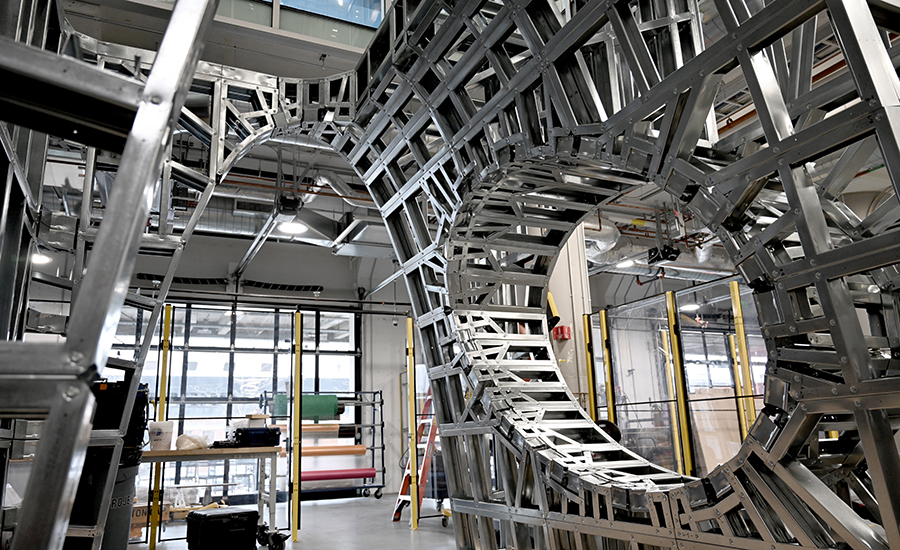
Fluid-ity project by STUD-IO
Modular Construction
Healthy change: M3 Components is transforming how we build healthcare facilities | Howick Ltd
SMART BUILD SPOTLIGHT: Capsule - Productising construction with DfMA | Howick Ltd
Disaster relief and humanitarian operations
Howick FRAMA™ technology deployed with the United States Navy | Howick Ltd
Building in hot and humid conditions
FAQ
Key questions to ask before choosing a steel framing machine.
Buying a steel framing machine is a big step towards scaling your construction capabilities. But how do you ensure you are making the right choice? The best way to avoid the common pitfalls is to ask some practical questions upfront about build quality, software compatibility, ongoing support, transportability, sustainability, and proven leaders in the digital fabrication market for nearly 50 years.
By answering these questions, you will see why so many forward-thinking builders and manufacturers choose Howick machines to best set themselves up for success for years to come.
Is the machine accurate to the millimetre?
Precision is the core characteristic that every other benefit of steel framing is built on, so start here and do not compromise.
Howick machines are engineered to deliver components to your exact measurements, right down to the millimetre. This precision speeds up assembly, improves the overall quality of construction, and reduces the need for rework. Ultimately, high-precision machines will save you time, minimise waste and cut your costs.
Are all roll-forming machines essentially the same?
No, not all roll-forming machines are created equal. Howick machines have unique features that you will not find elsewhere, such as the true-end-bearing detail. Exclusive to Howick machines, this feature crimps in the radius on the stud profile, so studs sit perfectly flat into the top and bottom tracks of a panel. This single feature reduces vertical shrinkage and eliminates shear stress on screws to improve the structural integrity of your builds.
Can I use any design software, or am I compelled to use that which is provided by the machine supplier?
Some machine suppliers require you to use their proprietary software. This can limit your design solutions and incur additional costs. In contrast, Howick machines feature an open-language control system, which reads CSV files, making them compatible with various CAD software packages, including Autodesk, Strucsoft, Tekla, Vertex, FrameBuilder-MRD, Dynamo, StudFinder, and many more.
Having a machine that integrates with your current design software could shorten your go-to-market timings. At the same time, you also want to allow for changes in the future as your business and needs grow.
If you value flexibility, you will want a machine that easily integrates with different software without costly licensing fees.
Because Howick machines are software agnostic, you can design with the software that best fits your workflow, now and into the future.
Finally, think of it this way. You as an end user want to drive change in the market. In an open competitive software market, you are in control to do that. In a proprietary software market, you are held captive!
Are there ongoing fees and hidden costs? Will these blow out my budget?
Buying a roll-forming machine is just one cost to consider. Are there also ongoing licensing fees for proprietary software or an extra fee per metre of steel you roll? These are hidden costs that can quickly add up. They can also increase at any time, which leaves you at the mercy of a supplier.
At Howick, we don't clip the ticket after the sale. We don't believe in it. You only pay for the machine and essential maintenance when needed onsite after the warranty period. This predictable cost structure allows for clearer budgeting and a quicker ROI.
No mandatory software licensing fees
With Howick, there are no ongoing software license fees. The open-language control system allows you to use your preferred solution without additional licensing costs. As your software needs evolve, you are free to make changes without being locked into a single provider or recurring charges.
No toll-to-roll meterage rates
Some other suppliers charge meterage; Howick does not. Once you own a Howick machine, you can produce as much steel framing as needed without paying toll-to-roll fees. We want you to maximise your machine usage without worrying about hidden costs impacting your production budget.
Can you have a “mobile factory” with machines operating onsite?
For most builders, factory manufacturing is the best solution and will provide you with the most options, flexibility and efficiency.
However, a mobile factory is possible for some specific uses. For example, to build emergency shelters and provide disaster relief, the US Navy Construction Battalion (called the SeaBees) transports and operates Howick FRAMA™ 3200 machines inside standard shipping containers. In this situation, speed and utility are the most important factors.
How important is customer support and training for my team?
Ongoing support is important for machines to operate efficiently and reliably. That includes regular maintenance, ongoing training, and accessible support systems.
Howick provides reliable support, with extensive training options to get your team up to speed quickly. With a global support network, you have help when you need it, maximising uptime and productivity.
Where was my machine built?
The supply chain involved in producing your machine can significantly affect its quality, performance, and environmental impact. With Howick machines, you have complete transparency about where every part comes from and who put it all together.
Every Howick machine is 100% New Zealand-made using precision-engineered components that we manufacture in-house or source locally. We also assemble everything inside our Auckland plant, where our team of highly trained specialists bring years of experience and meticulous attention to each job. This gives us the advantage of tremendous quality control.
We have oversight of our complete supply chain, systems and processes, ensuring a level of reliability and performance that sets our technology apart.
By keeping everything under one roof, we can swiftly adapt to your needs, incorporate your customisations, and reduce the risk of supply chain disruptions. Because of this, we can provide industry-leading levels of uptime for our systems and quality guarantees that are unique in the sector.
Where can I access steel and what type do I need?
At Howick our Regional Managers can provide you with points of contacts you can reach out to in the market. We do not become a middleman to sell you steel, we prefer to refer you to the source to get the best price.
Get the Howick advantage
To find out more about Howick and our range of technology for cold formed steel, talk to us today.
Prefer a printable versionDownload our Machine Buyer Guide as a PDF to keep as a handy reference or share with your team as you evaluate your manufacturing options.
|
 |
The information provided in this article is for general informational purposes only. All information is provided in good faith and should be used in the context it is provided. For specific details regarding your requirements, please contact us.
If this was useful, please share it with your network!


August 2026 #Roll-Forming Machine Buyer Guide