IN THE FRAME: AUGUST 2026
⏱️ 2 min read
How do you learn a new way of building without betting the business on it? How do you make a one-off project run with manufacturing discipline?
This month’s IN THE FRAME gets practical with two very different SMART BUILD SPOTLIGHT stories. Discover how All Metal Framing safely scaled their business from a zero-knowledge base, and how Revolution Steel helps makes custom builds more predictable (in a good way!).
We also look at what buyers should really compare when investing in roll-forming technology.
And the countdown is on to STEEL HORIZONS™ 2026. This November, we are bringing some of construction’s most forward-thinking minds together in North Carolina to explore what is next for our industry.
SMART BUILD SPOTLIGHT: All Metal Framing
All Metal Framing started with no framing experience, so founders Michael and Adam had to learn fast. But they were also smart about it. They started with projects small enough to learn safely, used digital tools to shorten the learning curve, and kept methodically refining their processes as the work got bigger.
Five years later, they are preparing for a project requiring 2.8 million pounds (1,270 metric tons) of steel.
Their story is full of practical lessons about learning, managing risk and scaling without losing what made the business work.
See how All Metal Framing scaled its business
Watch the All Metal Framing episode on YouTube
SMART BUILD SPOTLIGHT: Revolution Steel
Revolution Steel builds luxury homes where every project is different. So how do you bring manufacturing discipline to work that refuses to repeat? One word: Planning.
Before the first frame rolls out of their Howick machines, the Arizona team gets to work detailing 3D models, collaborating early with trades and feeding lessons from site back into production.
It is an approach that makes highly custom construction more predictable, while still leaving room to solve what the team calls its “little mini puzzles”.
See how to (predictably) deliver bespoke
Watch the Revolution Steel episode on YouTube
Buying a roll-former? Look beyond the machine
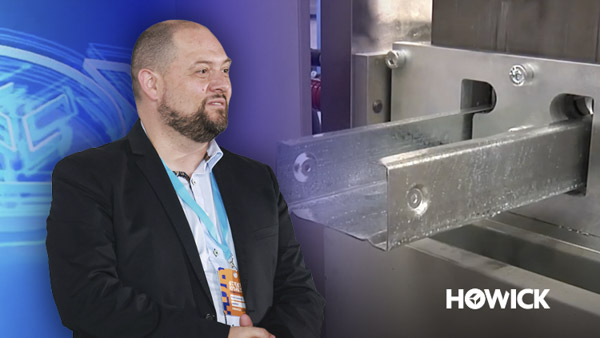
Specifications and purchase price are easy to compare. The harder question is what you are actually buying for the years that follow. A roll-forming system can make the build process faster and more efficient, while reducing rework and waste, but those outcomes depend on more than visible machine features. They come from the engineering decisions, testing, software approach and construction knowledge behind them.
If you are weighing up an investment, this article explains why two machines that look similar on paper can deliver very different whole-of-life value.
See what sits behind a Howick machine
STEEL HORIZONS™ 2026
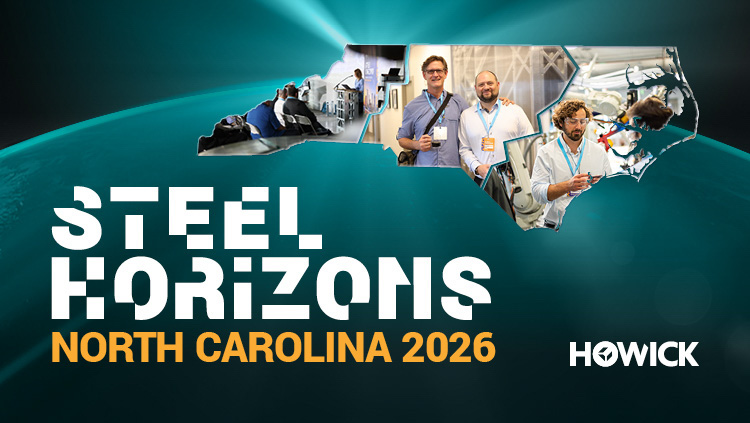
What happens when construction’s forward thinkers get in the same room?
On Wednesday 4 November 2026, STEEL HORIZONS™ 2026 touches down at DPR Construction’s Raleigh-Durham, North Carolina headquarters, a 100,000 square foot (9,290 square metre) facility DPR itself calls a “Living Lab” for prefabrication and digital construction.
Building on the success of London, Boston and Tampa, STEEL HORIZONS™ has become a forum for the industry’s most forward thinking leaders. This year’s speaker lineup includes Windover Construction, DPR Construction, MARTIN/MARTIN, Volumetric Building Companies and more. It is about exploring the ideas, technologies and business models shaping construction.
Capacity is strictly limited and attendance is by invitation only.
I would like to be considered for an invitation
Ready to build smarter?
That is August wrapped up. Two very different businesses showing how quickly good systems and curious teams can develop, a closer look at what makes a roll-forming investment pay off over time, and a date for the diary in North Carolina.
If you are thinking about where roll-forming, digital workflows or light steel framing could take your business next, start a conversation with the Howick team.


